
Baking Soda Substitute: What Works and How Much to Use

The closest baking soda substitute is baking powder: use 3 teaspoons of baking powder for every 1 teaspoon of baking soda, and if you can, ease off a little on the acid in the recipe. That swap is close but not exact, because the two do slightly different jobs. Honestly, no swap behaves exactly like baking soda, 1 for 1.
The good news is that most pancakes, muffins, quick breads and cookies still come out tender and well risen with a smart swap. Pick how much baking soda your recipe needs and the swap you have on hand, and the calculator below works out the exact amounts for you, plus a note on what will change.
Free calculator
Baking soda substitute calculator
Pick how much baking soda your recipe calls for and the swap you have, and see the exact amount to use.
More free baking tools


Why there is no true 1:1 swap for baking soda
Baking soda is a pure base. On its own it does almost nothing in a batter. It needs an acid partner, like buttermilk, yogurt, brown sugar, molasses, natural cocoa, lemon juice or pumpkin, to make the carbon dioxide bubbles that lift your bake. A typical recipe uses about 1/2 teaspoon of baking soda per cup of buttermilk for exactly that reason.
Baking soda also does two quieter jobs. It neutralizes some of the recipe's acid, so the finished bake tastes mellow instead of tangy. And it raises the pH of the dough, which helps cookies spread and helps crusts and tops brown deeper.
Baking powder, by contrast, is baking soda that already carries its own acid, plus a little starch to keep it dry. That is why it can replace baking soda for lift, but it cannot copy the other two jobs. If you want the full side-by-side, our guide to the difference between baking soda and baking powder walks through it. Here we focus on what to reach for when the soda box is empty.
 Baking guideBaking Soda vs Baking Powder: The Difference, ExplainedLearn more →
Baking soda substitute chart
All amounts below replace 1 teaspoon of baking soda. Scale up or down from there, or let the calculator do it.
| Swap | Amount for 1 tsp baking soda | Best for | What changes |
|---|---|---|---|
| Baking powder | 3 tsp (1 tbsp) | Pancakes, muffins, quick breads, cakes | Slightly tangier taste, paler top, less spread in cookies |
| Potassium bicarbonate | 1 tsp, plus up to 1/4 tsp salt if you like | Anything that uses baking soda | Works the same way; no sodium, so add salt for flavor |
| Self-rising flour | Replace the all-purpose flour; skip the salt | Biscuits, pancakes, simple quick breads | Best when the recipe uses 1/4 to 1/2 tsp soda per cup of flour |
| Baker's ammonia | 1 tsp | Thin, crisp cookies and crackers only | Very crisp texture; smells strong while baking |
| Whipped egg whites | Whip the recipe's own whites and fold them in | Pancakes, waffles, light cakes | Air lift only, no chemical rise; mix gently |
Baking powder: the 3 to 1 swap, explained
Baking soda is roughly three times stronger than baking powder, because baking powder is mostly acid and starch with a smaller share of soda mixed in. So 1 teaspoon of soda becomes 3 teaspoons (1 tablespoon) of baking powder. That gives you about the same amount of rising power.
Handle the acid in the recipe
Here is the catch. Your recipe's buttermilk or yogurt was there partly to react with the soda. Baking powder brings its own acid, so the buttermilk's acid now has nothing to cancel it. The result tastes a bit more sour and browns less.
If you can, swap some or all of the acidic liquid for regular milk. For example, use milk in place of buttermilk cup for cup. If you can't, the bake will still work. It will just taste a touch tangier, which most people never notice in a spiced muffin or a chocolate cake.
When 3 times is too much
The 3x rule gets awkward at bigger amounts. A recipe calling for 2 teaspoons of baking soda would need 2 tablespoons of baking powder, and that much can taste bitter or metallic. A normal amount of baking powder is about 1 to 1 1/2 teaspoons per cup of flour. If the 3x math puts you well above that, cap it around 1 1/2 teaspoons per cup of flour and switch the acidic liquid to milk. Also check that your baking powder is still fresh, since a tired can won't rise at any amount. Our guide on how long baking powder lasts has a quick hot-water test.
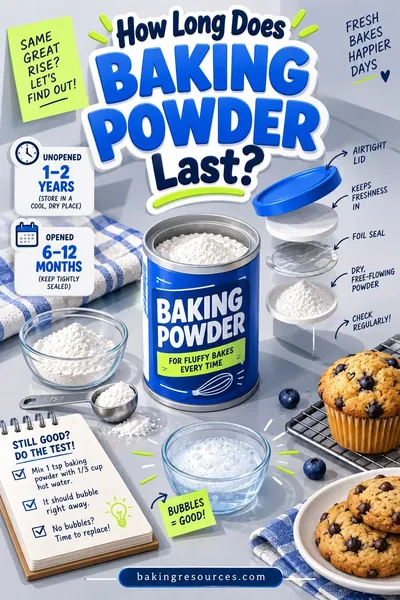 Baking guideHow Long Does Baking Powder Last? Shelf Life GuideGet the storage times →
Out of baking powder as well? Our list of baking powder substitutes covers that problem.
 Baking guideBaking Powder Substitute: 8 Swaps That Actually WorkFind my swap →
Potassium bicarbonate for a sodium-free swap
Potassium bicarbonate is the closest chemical twin to baking soda. It reacts with acid in the same way, so you can use it 1 for 1. The only real difference is flavor. Baking soda adds a little salty taste, and potassium bicarbonate doesn't, so some bakers add a pinch up to 1/4 teaspoon of salt per teaspoon to keep the flavor familiar. Skip that salt if you are baking for someone watching sodium.
It is sold in some pharmacies, home-brew shops and online. If low sodium is your main goal, our page on the low sodium baking soda substitute goes deeper on brands, salt-free baking powder and taste.
 Baking guideLow Sodium Baking Soda Substitute: Potassium Swaps That RisePick a substitute →
Self-rising flour and baker's ammonia
Self-rising flour
Self-rising flour is all-purpose flour with baking powder and salt already mixed in, usually about 1 1/2 teaspoons of baking powder and 1/4 teaspoon of salt per cup. Using the 3 to 1 rule, that is the rising power of about 1/2 teaspoon of baking soda per cup of flour.
So it works best for recipes that use about 1/4 to 1/2 teaspoon of soda per cup of flour, which covers most biscuits, pancakes and simple quick breads. Swap all of the all-purpose flour for self-rising flour, leave out the baking soda and the salt, and keep the baking powder only if the recipe called for a lot of it. You can also mix your own with our self-rising flour ratio.
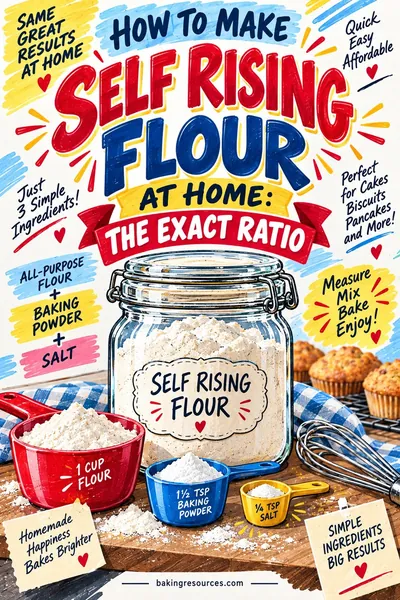 Baking guideHow to Make Self Rising Flour at Home: The Exact RatioLearn the method →
Baker's ammonia
Baker's ammonia (ammonium carbonate) is an old-fashioned leavener still used in some Scandinavian and German holiday cookies. Use it 1 for 1, but only in thin, dry, crisp bakes like crackers and crisp cookies. It smells strongly of ammonia while baking. In thin cookies that smell bakes off completely. In thick or moist bakes like cakes and muffins it gets trapped and leaves a bad taste, so don't use it there. Open the oven door away from your face, and keep the jar sealed.
Whipped egg whites: lift without any leavener
Before baking soda was common, bakers lifted batters with air. You can still do that. Separate the eggs the recipe already uses, mix the yolks in as normal, then whip the whites to soft peaks and fold them in last. Our guide on how to whip egg whites shows what soft peaks look like.
 Baking guideHow to Whip Egg Whites: Soft, Firm and Stiff PeaksShow me how →
This works well for pancakes, waffles and light sponge-style cakes, and the batter must go into the pan or onto the griddle right away. It does not work for cookies, dense quick breads or recipes with just one egg, since there aren't enough whites to carry the batter. Expect a slightly more delicate crumb than you'd get with soda.
Which swap to use for each bake
| What you're baking | Best swap | Tip |
|---|---|---|
| Buttermilk pancakes | Baking powder at 3x, or whipped whites | Use milk instead of buttermilk to avoid extra tang |
| Muffins and quick breads | Baking powder at 3x | Cap at about 1 1/2 tsp per cup of flour |
| Chewy drop cookies | Potassium bicarbonate 1:1 | Baking powder makes cookies puffier and paler |
| Thin crisp cookies | Baker's ammonia 1:1 or potassium bicarbonate | Bake until fully dry and crisp |
| Biscuits and soda bread | Self-rising flour, or baking powder at 3x | Use milk in place of buttermilk |
| Chocolate cake with natural cocoa | Baking powder at 3x | Color will be a little lighter and redder |
Cookies are the trickiest. Baking soda is part of what makes them spread and brown, so a powder swap often gives taller, softer, paler cookies. If yours come out puffy, our guide on why cookies turn out flat explains the spread levers from the other direction.
 Baking guideWhy Are My Cookies Flat? 8 Causes and the Fix for EachSee what went wrong →
Worked example: pumpkin bread for Thanksgiving
Say your pumpkin bread calls for 2 cups of flour, 1 teaspoon of baking soda and 1/2 teaspoon of salt, and you're out of soda the night before Thanksgiving.
- Do the 3x math. 1 teaspoon of soda times 3 is 3 teaspoons (1 tablespoon) of baking powder.
- Check the cap. 3 teaspoons over 2 cups of flour is 1 1/2 teaspoons per cup. That sits right at the normal top limit, so it's fine.
- Think about the acid. Pumpkin and brown sugar are mildly acidic, and nothing extra was added. Leave the recipe as it is.
- Bake as written. Expect a slightly lighter crust color and a loaf that tastes just as good. Start checking a few minutes early, since a paler top can fool you.
If the recipe had used 1 cup of buttermilk too, you would swap it for 1 cup of regular milk at the same time.
Holiday baking: gingerbread, soda bread and cornbread
Winter baking leans on baking soda more than any other season, so it's the time you're most likely to run out. Gingerbread cookies and cakes use soda to balance the strong acid in molasses, which is why our guide to what molasses is mentions it so often. With baking powder at 3x, gingerbread still rises well but tastes a bit sharper and bakes up lighter brown. For cutout gingerbread men that hold their shape, potassium bicarbonate is the closer match.
 Baking guideWhat Is Molasses? Types, Flavor and Baking SwapsRead it next →
Soda bread for a Christmas breakfast and cornbread for the Thanksgiving table both rely on buttermilk and soda. Either use self-rising flour, or use baking powder at 3x and switch to regular milk. If you have buttermilk but no milk, keep the buttermilk and accept a little extra tang. If you need buttermilk itself, our buttermilk substitute page has quick fixes.
 Baking guideButtermilk Substitute: 8 Easy Swaps That Work in BakingShow me the ratios →
Mistakes to avoid when swapping
- Swapping 1:1 with baking powder. This is the most common mistake. You end up with a third of the lift and a flat, dense bake.
- Going over 3x "just to be safe." Extra baking powder tastes bitter and can make a cake rise fast and then sink.
- Letting the batter sit. Whipped whites deflate, and some baking powder starts working as soon as it's wet. Bake right away.
- Using cream of tartar alone. Cream of tartar is an acid, not a base, so it cannot replace soda by itself. It only helps when you have soda and need an acid. Our cream of tartar substitute page covers that side.
- Forgetting altitude. Above about 3,000 feet you use less leavener, not more. Our high altitude baking chart gives the cut.
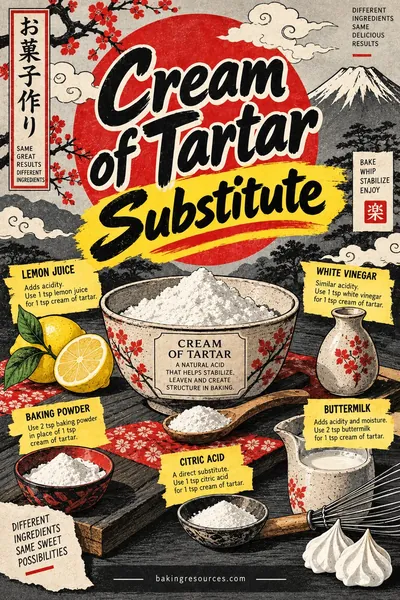 Baking guideCream of Tartar Substitute: What Works and WhenSee the swaps →
Want to understand the bigger picture of how gas, steam and air lift a bake? Our plain-English guide to what leavening means ties it all together.
Questions people ask
How much baking powder replaces 1 teaspoon of baking soda?
Use 3 teaspoons, which is 1 tablespoon, of baking powder for each teaspoon of baking soda. That gives about the same rising power. If the recipe has buttermilk or yogurt, swap it for regular milk if you can, since baking powder brings its own acid and the bake can taste a little tangy otherwise.
Can I just leave baking soda out of a recipe?
In cookies that only use 1/4 teaspoon, leaving it out gives a denser, paler cookie that is still edible. In pancakes, quick breads and cakes, leaving it out usually means a flat, heavy result and a sour taste from the unbalanced acid. A swap like baking powder at three times the amount is a much better plan.
Is baking powder the same as baking soda?
No. Baking soda is a pure base that needs an acid in the recipe to make bubbles. Baking powder already contains baking soda plus a dry acid and some starch, so it rises with just moisture and heat. Because it is only part soda, you need about three times as much to match baking soda's lift.
Can I use baking soda instead of baking powder?
Only if you also add an acid. A common mix is 1/4 teaspoon of baking soda plus 1/2 teaspoon of cream of tartar to replace 1 teaspoon of baking powder. Using soda alone without acid leaves a soapy, metallic taste and gives weak lift, so it is not a straight swap in either direction.
Why do my cookies look puffy and pale with baking powder instead of soda?
Baking soda raises the pH of cookie dough, which helps it spread and brown. Baking powder keeps the dough more acidic, so cookies stay taller and lighter in color. They still taste good. If you want flatter, browner cookies, potassium bicarbonate is a closer match, or flatten the dough balls slightly before baking.
Does potassium bicarbonate taste different from baking soda?
Most people find it tastes very close, just less salty, because it has no sodium. Some notice a faint bitter note if too much is used. Add a pinch up to 1/4 teaspoon of salt per teaspoon if you want the usual flavor, or leave the salt out when baking for someone on a low sodium diet.