Low Sodium Baking Soda Substitute: Potassium Swaps That Rise

The working low sodium baking soda substitute is potassium bicarbonate, swapped 1 teaspoon for 1 teaspoon. It reacts with acid the way baking soda does, it raises a batter much the same way, and it contains no sodium at all. One teaspoon of baking soda carries about 1,259 mg of sodium, so that single swap removes more than half a day's recommended limit from a batch of cookies.
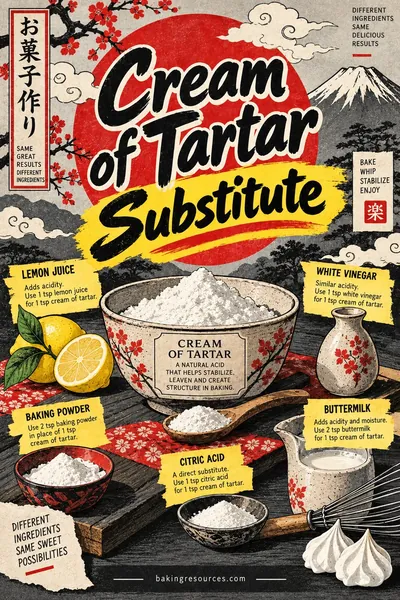
If the recipe calls for baking powder instead, make a sodium-free baking powder from 1/4 teaspoon of potassium bicarbonate and 1/2 teaspoon of cream of tartar for each teaspoon.
Do not add salt to make up for the flavor. Salt puts the sodium straight back in and defeats the purpose of the swap.
If you have been told to limit potassium, read the caution section before you use any of these swaps. That includes people with kidney disease and people on certain heart and blood pressure medicines. Potassium bicarbonate replaces sodium with a lot of potassium, and for you that is not a safe trade without your doctor's approval.
Our free baking substitutions finder lists potassium bicarbonate as the sodium-free option for baking soda, with the same caution attached.
Updated September 2026
How much sodium is in baking soda and baking powder
Most people cutting sodium look at salt and cheese first. The leavening line in a recipe is easy to miss, and it can carry nearly as much sodium as the salt.
| Ingredient, per level teaspoon | Sodium | Potassium |
|---|---|---|
| Baking soda (sodium bicarbonate) | About 1,259 mg | 0 mg |
| Baking powder, double-acting, aluminum type | About 488 mg | Trace |
| Baking powder, double-acting, phosphate type | About 363 mg | Trace |
| Low-sodium baking powder, store-bought | About 5 mg | About 505 mg |
| Potassium bicarbonate | 0 mg | About 1,750 mg |
| Cream of tartar | About 2 mg | About 495 mg |
| Table salt, for comparison | About 2,325 mg | 0 mg |
Figures are typical values for a level teaspoon and vary with the product and how firmly you pack the spoon. For reference, general dietary guidance for adults is under 2,300 mg of sodium a day, and many people on a sodium-restricted diet are given a target closer to 1,500 mg. Whatever number your doctor gave you is the one that counts.
Two things stand out in that table.
Baking soda is the heavy hitter. By weight it is about 27 percent sodium. A teaspoon of it carries more than twice the sodium of a teaspoon of baking powder, which is diluted with acid and starch.
Every sodium-free option carries potassium instead. That is the trade, and it is a good trade for most people cutting sodium. For people told to limit potassium, it is the reason to stop and ask first.
Low sodium baking soda substitute: potassium bicarbonate ratios
Potassium bicarbonate is baking soda's chemical twin. Both are bicarbonates, both react with an acid to release carbon dioxide, and both raise the pH of a dough. The only difference that matters in a kitchen is which mineral comes along: sodium in one, potassium in the other.
| Baking soda in the recipe | Potassium bicarbonate | Sodium removed | Potassium added |
|---|---|---|---|
| 1/4 tsp | 1/4 tsp | About 315 mg | About 440 mg |
| 1/2 tsp | 1/2 tsp | About 630 mg | About 875 mg |
| 3/4 tsp | 3/4 tsp | About 945 mg | About 1,310 mg |
| 1 tsp | 1 tsp | About 1,259 mg | About 1,750 mg |
| 1 1/2 tsp | 1 1/2 tsp | About 1,890 mg | About 2,625 mg |
| 2 tsp | 2 tsp | About 2,520 mg | About 3,500 mg |
Those potassium figures are for the whole recipe, not a single serving. Divide by the number of cookies, muffins or slices to see what one person eats.
Why 1:1 by volume works. A potassium bicarbonate molecule is a little heavier than a baking soda molecule, so gram for gram it releases about a sixth less gas. In practice a level teaspoon of each weighs about the same, around 4 1/2 g, and the difference in lift is small enough that batters hide it. If a bake does come out a touch short, check that the recipe still has its acid and that the batter went into the oven promptly, rather than heaping the spoon. More potassium bicarbonate means more bitterness and more potassium.
Weigh it if the potassium number matters to you. Every gram of potassium bicarbonate carries about 390 mg of potassium. A small scale that reads to 0.1 g turns an estimate into a real figure.
Buy it labeled for food use. Potassium bicarbonate is sold as a fine white powder in food-grade and non-food grades. Only the food-grade version belongs in a mixing bowl.
Sodium free homemade baking powder
Regular baking powder is baking soda with an acid and a starch mixed in. Build the same thing on potassium bicarbonate and the sodium disappears.
The ratio is the same 1 part bicarbonate to 2 parts cream of tartar that the standard homemade version uses, which our baking powder substitute guide explains in full. Cream of tartar is potassium bitartrate, so it brings no sodium either.
| Baking powder in the recipe | Potassium bicarbonate | Cream of tartar | Cornstarch, for storing only |
|---|---|---|---|
| 1/2 tsp | 1/8 tsp | 1/4 tsp | 1/8 tsp |
| 1 tsp | 1/4 tsp | 1/2 tsp | 1/4 tsp |
| 1 1/2 tsp | 3/8 tsp | 3/4 tsp | 3/8 tsp |
| 2 tsp | 1/2 tsp | 1 tsp | 1/2 tsp |
| 1 tbsp | 3/4 tsp | 1 1/2 tsp | 3/4 tsp |
Each teaspoon of this blend carries essentially no sodium and roughly 690 mg of potassium, about 440 mg from the bicarbonate and 250 mg from the cream of tartar.
It is single-acting. All of its gas is released as soon as it gets wet, with nothing held back for the oven. Whisk it into the dry ingredients, preheat the oven before you mix, and get the batter baking within about 5 minutes.
It keeps about a month in a sealed jar with the cornstarch added. Potassium bicarbonate pulls moisture from the air more readily than baking soda, so keep the lid tight and the jar away from the stove. Before a big bake, test a teaspoon in hot water the way our guide to how long baking powder lasts describes. It should foam hard and immediately.
Store-bought low-sodium baking powder is the other route. It swaps 1:1 for regular baking powder and carries about 5 mg of sodium and 505 mg of potassium per teaspoon. Many versions are single-acting, so read the label and bake promptly unless it says double-acting.
Pairing potassium bicarbonate with an acid
Potassium bicarbonate needs an acid exactly as baking soda does. Without one, it barely reacts, the bake stays flat, and the leftover bicarbonate tastes bitter.
If you are replacing baking soda in a recipe, change nothing else. The recipe was written with enough acid for its baking soda, and that same acid handles the potassium bicarbonate. The amounts of each acid, and why they differ so much, are covered in baking soda vs baking powder.
What the acid brings with it does matter on a sodium-restricted diet, and on a potassium-restricted one.
| Acid, in the amount that pairs with 1/4 tsp bicarbonate | Sodium | Potassium |
|---|---|---|
| Cream of tartar, 1/2 tsp | Trace | About 250 mg |
| Lemon juice, 1 tbsp | Trace | About 15 mg |
| White vinegar, 1 tbsp | 0 mg | Trace |
| Buttermilk, 1/2 cup | About 130 mg | About 185 mg |
| Plain yogurt, 1/2 cup | About 55 mg | About 190 mg |
| Natural cocoa powder, 3 tbsp | Trace | About 245 mg |
| Molasses, 1/4 cup | About 30 mg | About 1,170 mg |
Lemon juice and vinegar are the leanest acids on both counts. They carry almost no sodium and almost no potassium, which makes them the first choice for anyone watching either mineral.
Buttermilk is the one sodium surprise. Half a cup carries about 130 mg, which is modest but real. Plain yogurt carries less than half that.
Molasses is the potassium surprise. A quarter cup brings more potassium than half a teaspoon of potassium bicarbonate does, and far more than the 1/4 teaspoon it pairs with. If you are counting potassium, gingerbread and molasses cookies stack up quickly even before the leavener.
If you are out of cream of tartar for the homemade baking powder, the swaps sorted by job are in our cream of tartar substitute guide. For leavening, lemon juice or vinegar is the sodium-free stand-in.
How taste and browning change
Browning and spread barely change. What makes a soda cookie spread and turn deep golden is the rise in pH, and potassium bicarbonate raises pH the same way baking soda does. Cookies spread, cakes brown and chocolate stays dark.
Flavor changes more. Baking soda contributes a faint salty edge of its own, and potassium bicarbonate does not. The bake tastes a little flatter. Used in excess, potassium bicarbonate adds a slightly bitter, mineral note, which is one more reason to stick to the recipe's amount.
Do not reach for the salt shaker to fix it. Every pinch of salt puts back sodium you just took out. Do not reach for a potassium salt substitute either, which stacks more potassium on top of what the leavener already added. Build flavor in other ways:
- Unsalted butter. If the recipe uses salted butter, switching to unsalted removes about 90 mg of sodium per tablespoon. Our guide to salted vs unsalted butter covers how that changes a recipe.
- More vanilla. An extra 1/2 teaspoon of vanilla makes sweet bakes taste fuller.
- Citrus zest. Lemon or orange zest brightens a flat-tasting batter with no sodium.
- Warm spices. Cinnamon, nutmeg, ginger and cardamom all cover the missing salty note.
- Browned butter. Cooking the butter until nutty adds depth that reads as savory. Our guide on how to brown butter has the method.
- Toasted nuts. Toasting deepens their flavor considerably.
Which bakes tolerate the swap
| Bake | How well it takes potassium bicarbonate | Notes |
|---|---|---|
| Chocolate cake and brownies | Excellent | Cocoa hides any bitterness completely |
| Chocolate chip cookies | Very good | Brown sugar and vanilla carry the flavor |
| Gingerbread and molasses cookies | Very good for taste | High potassium from the molasses itself |
| Snickerdoodles | Very good | Cream of tartar plus potassium bicarbonate is fully sodium-free |
| Pancakes and waffles | Good | Use lemon juice or yogurt as the acid to cut sodium further |
| Muffins and quick breads | Good | Spices and fruit cover the flatter taste |
| Banana bread | Good for taste | Bananas add potassium of their own |
| Cornbread | Fair | Tastes noticeably flatter, add herbs or pepper |
| Irish soda bread | Fair | Flavor depends on salt, the texture holds up |
| Buttermilk biscuits | Fair | Rises well, tastes the flattest of all |
| Recipes using self-rising flour | Not directly | Self-rising flour contains salt and regular baking powder |
The pattern is simple. Bakes with strong flavors of their own, like chocolate, spice and brown sugar, hide the change. Plain, savory bakes that lean on salt for flavor, like biscuits and soda bread, show it most. Yeast-free pizza crusts and flatbreads made with baking powder instead of yeast belong in that second group. If you switch them to the sodium-free blend, shape and bake right away, since it is single-acting, and lean on herbs and garlic for flavor.
For self-rising flour recipes, rebuild the flour. Use all-purpose flour with 1 1/2 teaspoons of the sodium-free baking powder per cup and leave the salt out.
One more sodium-free and potassium-free option exists for crisp cookies. Baker's ammonia, which is ammonium bicarbonate, breaks down completely in oven heat and needs no acid. It only suits thin, dry, crisp cookies and crackers, where the ammonia smell can escape during baking. In anything thick or moist it leaves an ammonia taste. It is best used in recipes written for it.
If you have been told to limit potassium
This section matters more than any ratio on the page.
Potassium bicarbonate, store-bought low-sodium baking powder, cream of tartar and potassium-based salt substitutes all add potassium, and the amounts are not small. A teaspoon of potassium bicarbonate carries about 1,750 mg.
Talk to your doctor or dietitian before using any of these swaps if:
- You have chronic kidney disease, or you are on dialysis. Kidneys that are not working fully cannot clear extra potassium, and it builds up in the blood.
- You take medicines that raise potassium levels. These include some blood pressure and heart medicines, such as ACE inhibitors, angiotensin receptor blockers and potassium-sparing diuretics.
- You have been told you have high potassium, or you have a heart rhythm condition.
- You are on any diet that restricts potassium, for any reason.
High blood potassium can affect heart rhythm, often without warning symptoms, which is why this caution is not optional.
Lower-sodium baking that adds no potassium is still possible. Cut or omit the salt the recipe calls for, since it is often the single biggest sodium source in the bowl. Use baking soda or baking powder at the lower end of a recipe's range rather than switching to a potassium leavener. And look for bakes that rise mainly on whipped eggs, which need little or no chemical leavening. Kidney diets often limit phosphorus too, and many regular baking powders use phosphate acids, so ask your dietitian which leavener fits your plan.
This page is general baking information, not medical advice.
Worked example: chocolate chip cookies
A standard batch: 2 1/4 cups flour, 1 teaspoon baking soda, 1 teaspoon salt, 1 cup unsalted butter, 3/4 cup granulated sugar, 3/4 cup packed brown sugar, 2 large eggs, 1 teaspoon vanilla and 2 cups chocolate chips. It makes about 48 cookies.
Step 1. Count the sodium as written.
- Baking soda: about 1,259 mg
- Salt: about 2,325 mg
- Two eggs: about 140 mg
- Brown sugar, chips and the rest: about 100 mg
Total: about 3,820 mg, or roughly 80 mg per cookie.
Step 2. Swap the leavener. Replace the baking soda with 1 teaspoon of potassium bicarbonate. The brown sugar still provides the acid, so nothing else changes. Total sodium drops to about 2,560 mg, or about 53 mg per cookie.
Step 3. Cut the recipe's own salt. Reduce the salt from 1 teaspoon to 1/4 teaspoon. Total sodium falls to about 820 mg, or about 17 mg per cookie. Add an extra 1/2 teaspoon of vanilla to make up some of the flavor.
Step 4. Count what was added. The potassium bicarbonate brings about 1,750 mg of potassium across the batch, or about 36 mg per cookie on top of what the chocolate and brown sugar already carry.
The result: cookies that spread and brown just like the originals, taste a little less salty, and carry about a fifth of the original sodium.
Worked example: buttermilk pancakes
A standard batch: 2 cups flour, 2 teaspoons baking powder, 1/2 teaspoon baking soda, 1/2 teaspoon salt, 2 cups buttermilk, 2 eggs and 3 tablespoons unsalted butter. It makes about 16 pancakes.
Sodium as written: baking powder about 976 mg, baking soda about 630 mg, salt about 1,163 mg, buttermilk about 515 mg and eggs about 140 mg. Total about 3,420 mg, or roughly 215 mg per pancake.
The low-sodium version:
- Replace the 2 teaspoons of baking powder with 1/2 teaspoon potassium bicarbonate plus 1 teaspoon cream of tartar.
- Replace the 1/2 teaspoon of baking soda with 1/2 teaspoon potassium bicarbonate.
- Cut the salt to 1/4 teaspoon.
- Keep the buttermilk, or use plain yogurt thinned with water to cut its sodium further.
New total: about 1,235 mg of sodium, or roughly 77 mg per pancake. The potassium added by the leaveners comes to about 2,250 mg across the batch, around 140 mg per pancake. Mix the batter just before cooking, since both leaveners are now single-acting.
Frequently asked questions
What is the best low sodium substitute for baking soda?
Potassium bicarbonate, used 1 teaspoon for 1 teaspoon. It reacts with acid exactly like baking soda, gives the same rise, browning and spread, and contains no sodium. Keep the recipe's acid as written and do not add salt to compensate. Anyone told to limit potassium should ask their doctor before using it.
How much sodium is in a teaspoon of baking soda?
About 1,259 mg, which is more than half of the 2,300 mg daily limit in general dietary guidance. Double-acting baking powder carries roughly 363 to 488 mg per teaspoon depending on the type. Table salt is the only common baking ingredient with more, at about 2,325 mg per teaspoon.
How do I make sodium free baking powder?
Mix 1/4 teaspoon of potassium bicarbonate with 1/2 teaspoon of cream of tartar for each teaspoon of baking powder. Add 1/4 teaspoon of cornstarch if you are storing it. It is single-acting, so bake right after mixing, and it keeps about a month in a sealed jar. Each teaspoon carries roughly 690 mg of potassium.
Does potassium bicarbonate taste different from baking soda?
A little. Bakes taste slightly flatter because baking soda adds a faint salty note that potassium bicarbonate does not, and too much potassium bicarbonate tastes bitter. Chocolate, spices and brown sugar hide the difference well. Build flavor with vanilla, zest or spices rather than salt.
Is potassium bicarbonate safe for people with kidney disease?
Not without medical approval. People with kidney disease often cannot clear extra potassium, and one teaspoon of potassium bicarbonate carries about 1,750 mg. The same caution applies to people taking medicines that raise potassium, such as ACE inhibitors, angiotensin receptor blockers or potassium-sparing diuretics. Ask your doctor or dietitian before using it.
Can I just leave the baking soda out to cut sodium?
Only in a few recipes. Without baking soda, a batter that relies on it bakes flat and dense, and the recipe's acid is left unneutralized, so it can taste sour. Cutting the recipe's added salt usually removes more sodium with less damage, and potassium bicarbonate keeps the rise if potassium is not a concern for you.
Can I use low-sodium baking powder instead of baking soda?
Not one for one. Baking powder is much weaker than baking soda, so you would need three to four times as much, which adds potassium, acid and a metallic taste. Replace baking soda with potassium bicarbonate, and replace baking powder with low-sodium baking powder or the homemade potassium blend.
Will potassium bicarbonate make cookies spread and brown?
Yes, just as baking soda does. Spread and browning come from raising the dough's pH, and potassium bicarbonate raises pH the same way. Cookies made with it spread and brown almost identically, sometimes rising a touch less. The difference you are most likely to notice is a slightly less salty taste.
Related guides
- Baking Soda vs Baking Powder for the acid amounts that pair with any bicarbonate
- Baking Powder Substitute for the standard homemade baking powder ratio
- Cream of Tartar Substitute for other acids when the jar is empty
- How Long Does Baking Powder Last for storing and testing a homemade blend
- Substitutions Finder to look up any swap with exact ratios