
How to Tell When Pumpkin Pie Is Done: Temp, Wobble, and Knife Test

Pumpkin pie is done when the center of the filling reaches about 175°F (79°C) and the edges are set while a circle about 2 inches across in the middle still wobbles slightly when you nudge the pie. A knife slipped in about an inch from the center should come out mostly clean. Take it out at that point, because the filling keeps setting as it cools.
Got a thermometer reading? Pop it into the calculator below and it tells you whether to keep baking, pull the pie now, or how to handle one that went a bit far. After that, you'll find the knife test done right, why pies crack, and a Thanksgiving bake-ahead plan.
Free calculator
Pumpkin pie doneness checker
Type the temperature from the center of your pumpkin pie filling and see whether it's ready to come out.
More free baking tools



Why pumpkin pie is tricky to judge
Pumpkin pie filling is a custard. Pumpkin puree, eggs, sugar, spices, and evaporated milk or cream go in as a pourable liquid, and the eggs are what turn it into something you can slice. As the filling heats, the egg proteins unwind and link up into a soft network that traps the liquid. Stop at the right point and you get a smooth, silky slice.
Keep going and those proteins squeeze tighter and tighter. They push water out, the surface shrinks, and the pie cracks down the middle. That's why pumpkin pie gives you a fairly narrow window, and why a pie that looks fully firm in the oven is usually overdone by the time it cools.
The good news: the window is easy to hit once you know the signs. A center temperature of about 175°F (79°C), with anywhere from 170°F to 180°F as a safe stopping zone, lines up with a wobble that's easy to see.
The three tests: temperature, wobble, and knife
1. Temperature (the most reliable)
Slide an instant-read thermometer into the center of the filling, about halfway down, without touching the crust. Hold it a few seconds until the number settles. At about 175°F, the pie is done. It's also well above 160°F, the temperature egg dishes need to reach for food safety, so you're covered there too.
2. The 2 inch wobble
Wearing oven mitts, give the pie plate a gentle shake. The outer part of the filling, from the crust in toward the middle, should stay put. The center, a circle about 2 inches across, should jiggle slightly as one piece. It should not ripple in waves or slosh. If the whole surface moves, give it more time.
3. The knife test
Insert a thin knife about 1 inch from the center and pull it straight out. If it comes out mostly clean, with maybe a little smear of filling, the pie is done. If it's coated in wet filling, keep baking. Don't test right in the middle, because the very center is supposed to be a bit softer than the rest.
Use two of the three. The thermometer plus the wobble is the strongest pair, and the knife test is handy when you don't have a thermometer.
Pumpkin pie doneness at a glance
| Check | Not done | Done | Overbaked |
|---|---|---|---|
| Center temperature | Under 160°F | 170°F to 180°F, aim for 175°F | 185°F and up |
| Wobble | The whole surface ripples | Middle 2 inches jiggles slightly | Nothing moves |
| Knife 1 inch from center | Comes out wet | Comes out mostly clean | Clean and leaves a split |
| Surface | Shiny, wet looking | Matte at the edges, slight sheen in the middle | Puffed, then cracking |
| Edges of the filling | Soft | Set, maybe slightly puffed | Puffed high and pulling from the crust |
How long pumpkin pie takes to bake
Most recipes use one of two methods. Some start hot to set the crust, then drop the heat for the filling. Others bake at one moderate temperature the whole time. Either works. Use the times below to know when to start checking, then let the tests above make the final call.
| Pie | Oven | Start checking at | Usual total time |
|---|---|---|---|
| 9 inch, standard | 425°F for 15 min, then 350°F | 40 minutes after lowering | 55 to 65 minutes total |
| 9 inch, standard | 350°F the whole time | 45 minutes | 50 to 60 minutes |
| 9 inch, deep dish | 375°F the whole time | 55 minutes | 60 to 75 minutes |
| Prebaked crust | 350°F | 35 minutes | 40 to 50 minutes |
| Mini pies, muffin pan | 350°F | 18 minutes | 20 to 25 minutes |
Deep-dish pies hold more filling, so they take noticeably longer. If you're swapping dish sizes, check our pie pan size guide before you fill. If your oven tends to bake unevenly, rotate the pie halfway through and see our oven temperature guide if your recipe lists Celsius or gas marks.
 Baking guidePie Pan Sizes: Standard, Deep Dish and Tart Pan GuideSee the sizes →
 Free toolOven Temperature Conversion: °F, °C, Gas Mark and FanUse the free tool →
A worked example
You're baking a standard 9 inch pumpkin pie: 425°F for 15 minutes, then 350°F. Your recipe says 40 to 50 minutes after you turn the oven down.
- At 40 minutes after lowering: the edges are set, but the middle 5 inches ripples. The thermometer reads 158°F. Not done.
- At 47 minutes: the crust edge is getting dark, so you add a foil ring. The wobbly spot is about 3 inches wide. Reading: 168°F. Nearly there.
- At 52 minutes: only the middle 2 inches jiggle, and it moves as one piece. A knife 1 inch from center comes out with a faint smear. Reading: 175°F. Done.
- You move the pie to a wire rack and leave it for 2 to 3 hours, until it's at room temperature, then put it in the fridge.
By morning, the filling slices cleanly and the top is smooth, with no crack.
Why pumpkin pie cracks (and other mistakes)
Overbaking
A crack down the middle almost always means the filling got too hot. The proteins tightened, then shrank as the pie cooled, and the surface split. Pull it at 175°F next time, while the middle still wobbles.
Too hot an oven
A filling baked at a high temperature for the whole bake sets fast at the edges and overcooks before the middle is ready. If your oven runs hot, check it with an oven thermometer.
Cooling in a cold, drafty spot
A big temperature drop makes the custard shrink quickly. Cool it on a rack on the counter, away from an open window or a chilly porch.
A soggy bottom crust
Wet custard sitting on raw dough is a recipe for a pale, damp bottom. Blind baking the crust first helps a lot, and our guide to blind baking a pie crust shows how. Baking on the lower rack helps too; see which oven rack to use.
 Baking guideHow to Blind Bake a Pie Crust Without a Soggy BottomShow me how →
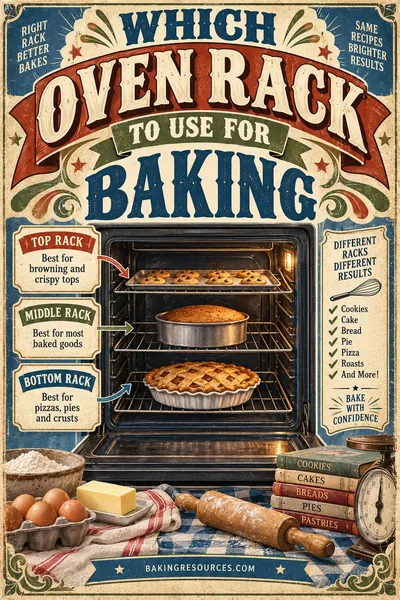 Baking guideWhich Oven Rack to Use for Baking: Top, Middle, LowGet the details →
A tough crust
That's a dough issue, not a doneness issue. Our page on why pie crust turns tough covers it.
 Baking guideWhy Is My Pie Crust Tough? Causes and Fixes That WorkFix it next time →
Burned crust edges
The fluted edge cooks faster than the filling. Cover it with a foil ring or pie shield once it's golden, usually 20 to 30 minutes in.
Cooling, storing, and food safety
Pumpkin pie is an egg and milk custard, so it belongs in the fridge. Cool it on a rack for about 2 hours, until it's no longer warm, then refrigerate it. Once it's cool, don't leave it out for more than 2 hours, and that includes time on the dessert table. Covered in the fridge, it keeps 3 to 4 days.
You can freeze a baked pumpkin pie for up to 1 month, wrapped well, though the filling may get a little softer when it thaws. Thaw it overnight in the fridge, not on the counter. For more on wrapping and freezing, see how to store baked goods.
 Baking guideHow to Store Baked Goods: Counter, Fridge or FreezerGet the storage times →
Thanksgiving pumpkin pie: the bake-ahead timeline
Pumpkin pie actually tastes and slices better after a night in the fridge, which makes it one of the easiest Thanksgiving desserts to get out of the way early. It also frees your oven on Thursday for the turkey.
- The weekend before: Make the crust dough and freeze it. Our guide on freezing pie dough has the steps.
- Tuesday: Move the dough to the fridge to thaw. Check that you have evaporated milk. If you run out, here's an evaporated milk substitute that works in pie.
- Wednesday morning: Roll, blind bake, fill, and bake to 175°F.
- Wednesday afternoon: Cool on a rack for 2 to 3 hours, then refrigerate overnight.
- Thursday: Take it out about 30 minutes before dessert so the chill comes off. Pipe or spoon on whipped cream right before serving.
 Baking guideHow to Freeze Pie Dough: Discs, Shells, and ThawingGet the proofing tips →
 Baking guideSubstituting Evaporated Milk for Whole Milk in BakingWhat can I use? →
Baking two pies? Bake them side by side on the same rack if they fit, with space around each, and expect them to take 5 to 10 minutes longer than one alone. Check each pie separately, since one may finish before the other.
Homemade puree, cream, and other swaps that change the timing
Fresh roasted pumpkin or squash puree is often wetter than canned. Strain it in a fine sieve or cook it down until it's as thick as canned, or your pie will take longer and may never fully set. Using heavy cream instead of evaporated milk gives a richer filling that sets a bit softer, so lean on the thermometer. If you're short on cream, our heavy cream substitute guide covers the swaps that still work in custard.
 Baking guideHeavy Cream Substitute: What Whips and What Doesn'tGet the swap chart →
Dairy-free pies made with coconut milk tend to stay softer too. They may need a few extra minutes to reach 175°F, and they firm up more in the fridge than in the oven.
Store-bought frozen crusts are usually thinner and sit in a shallow foil pan. They heat up faster, so the filling near the edge sets sooner and the whole pie can finish 5 to 10 minutes earlier than a homemade crust in a glass or ceramic dish. Set the foil pan on a sheet pan so it's easy to move without bending, and start checking early.
Glass and ceramic plates work the other way. They take longer to heat up but hold the heat well after the pie leaves the oven, so a pie in a heavy ceramic dish keeps cooking a little longer on the rack. Pulling it at the low end of the done range, around 170°F to 172°F, gives that extra carryover room to finish the job.
Questions people ask
Should pumpkin pie be jiggly when you take it out?
A little, yes. The edges should be set, and only a circle about 2 inches across in the middle should jiggle slightly, moving as one piece. That last bit of wobble firms up as the pie cools. If the whole surface ripples or sloshes, it needs more time. If nothing moves at all, it has probably gone a bit too far and may crack.
What temperature is pumpkin pie done?
About 175°F (79°C) in the center of the filling, measured halfway down with an instant-read thermometer. Anywhere from 170°F to 180°F is a good place to stop. That's comfortably above 160°F, the temperature egg dishes need to reach for safety. Once the center climbs past about 185°F, the custard tends to crack and turn firm.
Can you fix an underbaked pumpkin pie?
If it's still warm, put it back in a 350°F oven and check every 5 to 10 minutes, covering the crust edge with foil so it doesn't burn. If it has already cooled and the center is runny, you can still rebake it at 350°F until the center reaches 175°F. It will take longer since it's starting cold, and the crust will get darker.
Why did my pumpkin pie crack?
Almost always because it baked too long or too hot. The egg proteins tighten as the filling heats past done, then shrink as the pie cools, and the surface splits. A fast cool-down in a cold spot can make it worse. Pull the pie at about 175°F while the middle still wobbles, and cool it on a rack at room temperature.
Does pumpkin pie need to be refrigerated?
Yes. Pumpkin pie is a custard made with eggs and milk, so it should be refrigerated once it has cooled, usually after about 2 hours on a rack. Don't leave it at room temperature for more than 2 hours after that, including serving time. Covered in the fridge, it keeps 3 to 4 days.
How far ahead can I make pumpkin pie for Thanksgiving?
One day ahead is ideal, so bake it Wednesday. It has time to chill and set, and your oven is free on Thursday. Two days ahead also works, since it keeps 3 to 4 days in the fridge. You can freeze a baked pie for up to a month, but the filling may soften a little after thawing.