
How Many Eggs in a Cup? Whole Eggs, Whites and Yolks by Size

About 5 large eggs make 1 cup once they are cracked and beaten. A large egg is about 50 grams out of the shell, or a little over 3 tablespoons, and a cup of beaten egg weighs about 240 grams. If you only need part of the egg, 1 cup is about 8 large egg whites or about 13 large yolks.
The count changes with egg size. You need about 6 small eggs or only 4 jumbo eggs to fill the same cup, and that difference is exactly why a recipe can come out dry or runny when you use whatever size was in the carton. Pick your egg size, the part of the egg and the amount in the calculator below, and it tells you how many to crack.
Free calculator
Eggs in a cup calculator
Pick your egg size, whether you need whole eggs, whites or yolks, and how much the recipe calls for to see how many eggs to crack.
More free baking tools



How many eggs in a cup, by egg size
This is the main chart. Counts are for eggs cracked into a measuring cup and lightly beaten, so the yolks and whites are mixed and there are no big air gaps. A cup of beaten egg, egg white or egg yolk weighs about 240 grams, close to a cup of water, which makes the math simple.
| Egg size | Whole eggs per cup | Whites per cup | Yolks per cup |
|---|---|---|---|
| Small | About 6 | About 11 | About 17 |
| Medium | About 5 1/2 | About 9 | About 15 |
| Large | About 5 | About 8 | About 13 |
| Extra large | About 4 1/2 | About 7 | About 12 |
| Jumbo | About 4 | About 6 | About 11 |
Most American recipes are written for large eggs, so the large row is the one to remember: 5 whole eggs, 8 whites or 13 yolks per cup. If a recipe asks for "1 cup of eggs" and you have large eggs, crack 5 and you will be within a few grams.
Notice how much the counts move. Six small eggs and four jumbo eggs fill the same cup. A recipe that says "4 eggs" without a size could mean anywhere from about 3/4 cup to a full cup of egg, which is a real difference in a cake or custard.
What one egg measures in grams and tablespoons
US egg sizes are set by the minimum weight of a dozen eggs in the shell: 18 ounces for small, 21 for medium, 24 for large, 27 for extra large and 30 for jumbo. That works out to about 1 1/2, 1 3/4, 2, 2 1/4 and 2 1/2 ounces per egg in the shell. Once you crack them and lose the shell, here is what you get:
| Egg size | Whole egg, out of shell | White | Yolk |
|---|---|---|---|
| Small | About 38 g, 2 1/2 tbsp | About 22 g, 1 1/2 tbsp | About 14 g, 1 scant tbsp |
| Medium | About 44 g, 3 tbsp | About 26 g, 1 3/4 tbsp | About 16 g, 1 tbsp |
| Large | About 50 g, 3 1/4 tbsp | About 30 g, 2 tbsp | About 18 g, 1 generous tbsp |
| Extra large | About 56 g, 3 3/4 tbsp | About 34 g, 2 1/4 tbsp | About 20 g, 1 1/3 tbsp |
| Jumbo | About 63 g, 4 tbsp (1/4 cup) | About 38 g, 2 1/2 tbsp | About 22 g, 1 1/2 tbsp |
You will often see a large egg described as "3 tablespoons." That is a fine rounded number. Measured carefully it is a touch more, about 3 1/4 tablespoons. The white and yolk do not add up perfectly to the whole egg because of rounding and the bit of white that clings to the shell.
These same weights are used across the site, including the ingredient weight chart, so the numbers here will match if you are converting a whole recipe to grams.
 Free toolIngredient Weight Chart: Grams per Cup, Tablespoon and TeaspoonTry the calculator →
Why "about" is the honest answer
Egg counts per cup are always approximate, for a few reasons worth knowing:
- Size classes are minimums for a dozen. A carton of large eggs has to weigh at least 24 ounces, but the eggs inside can vary. One egg might be 47 grams and the next 56.
- Whites and yolks shift with the egg. Some eggs have bigger yolks and some have more white, even at the same weight.
- Beaten or not changes the fit. Unbeaten eggs in a cup leave gaps and the whites slide around, so the cup looks fuller or emptier than it is. Beat them lightly with a fork first.
- Foam fools you. If you whisk hard, the bubbles on top make the cup look full when it is not. Let the foam settle, or measure before you whisk.
For cookies, brownies, muffins and quick breads, counting eggs is plenty accurate. For recipes where eggs are the structure, like chiffon cake, angel food cake, custards and meringues, weighing beats counting. Crack the eggs into a bowl on a scale and use the grams in the charts. The kitchen scale vs measuring cups guide explains why weight is more reliable for wet ingredients like this.
 Baking guideKitchen Scale vs Measuring Cups: Why Weight WinsRead the guide →
How to swap egg sizes in a recipe
When a recipe says "2 eggs" without a size, assume large. If your carton holds a different size, use this chart. It is based on the gram weights above and rounded to the nearest whole egg, with a top-up of beaten egg where rounding would be too far off.
| Recipe calls for (large) | Small | Medium | Extra large | Jumbo |
|---|---|---|---|---|
| 1 egg (50 g) | 1 | 1 | 1 | 1 |
| 2 eggs (100 g) | 3 | 2 | 2 | 2 |
| 3 eggs (150 g) | 4 | 3, plus 1 tbsp beaten egg | 3 | 2, plus 1 1/2 tbsp beaten egg |
| 4 eggs (200 g) | 5 | 4, plus 1 1/2 tbsp beaten egg | 4 | 3 |
| 5 eggs (250 g) | 7 | 6 | 4, plus 1 1/2 tbsp beaten egg | 4 |
| 6 eggs (300 g) | 8 | 7 | 5 | 5 |
For one or two eggs, the size barely matters. The difference between a medium and a jumbo egg is less than 20 grams, and most batters won't notice. From three eggs up, the gap adds up fast, and that is where the chart earns its keep.
If you are using a recipe converter to scale the whole recipe, the recipe converter handles the other ingredients, and you can use the egg chart here for the eggs.
 Free toolRecipe Converter: Halve, Double or Scale Any RecipeWork out my amount →
When the egg swap matters and when it doesn't
Eggs do several jobs at once: they bind, add moisture, help with lift, and set into structure as they cook. Our guide to what eggs do in baking covers each job in detail. Whether a size swap matters depends on how much of the work the eggs are doing.
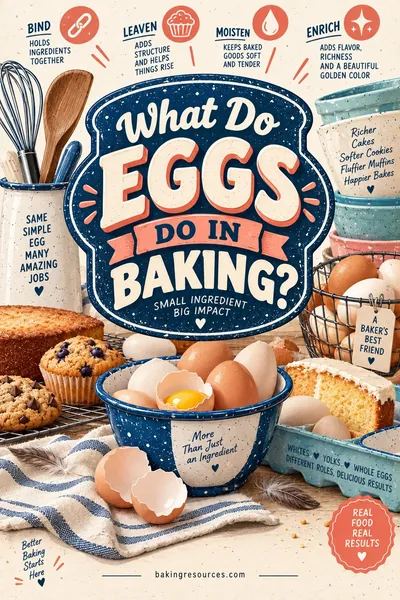 Baking guideWhat Do Eggs Do in Baking? Structure, Lift and RichnessTake a look →
Forgiving recipes
Drop cookies, brownies, muffins, banana bread, pancakes and most yeast doughs use eggs mostly for moisture and richness. A little more or less egg changes the texture slightly, but the result is still good. Counting eggs is fine here, even with a size swap.
Sensitive recipes
- Custards and pumpkin pie. Eggs are what make the filling set. Too much egg gives a firm, rubbery custard; too little gives a soft one that won't slice cleanly.
- Sponge, chiffon and angel food cakes. The eggs are the structure and the lift. Off by 20 percent and the cake can sink or turn dry.
- Meringues and macarons. The sugar is measured against the whites. Extra white means a softer, weepier meringue.
- Cut-out cookies. An extra-large egg in a dough meant for a large one can make it sticky and harder to roll.
For these, weigh the eggs or use the calculator to measure by the cup.
Does egg size change the bake time?
A little. Extra egg means extra liquid, so a batter made with jumbo eggs in place of large ones can take a few more minutes to set in the center, and a custard pie may need a little longer before the middle stops sloshing. Fewer or smaller eggs work the other way. The change is usually only a few minutes, so check doneness with the usual signs instead of trusting the timer: a toothpick that comes out with moist crumbs for cakes, or a gentle wobble only in the center for custards.
How to measure part of an egg
Recipes that need "1 1/2 eggs," or a halved recipe that now needs half an egg, can feel awkward. It is easy once you know half a large egg is about 25 grams, a little more than 1 1/2 tablespoons.
- Crack the egg into a small bowl or cup.
- Beat it well with a fork until the white and yolk are fully mixed and no stringy white is left. If the egg is not well mixed, your half could be mostly white or mostly yolk.
- Measure out what you need: about 1 1/2 tablespoons plus 1 teaspoon for half a large egg, or weigh 25 grams.
- Cover the leftover egg, refrigerate it, and use it within 2 days. It is just right for an egg wash on a pie crust or bread. Our page on what an egg wash is covers which mix gives which finish.
 Baking guideWhat Is an Egg Wash? When and How to Brush It OnRead it next →
Half a yolk is trickier, because yolks are thick and do not pour neatly. Break the yolk with a fork, stir it until smooth, then scoop out half with a teaspoon, roughly 9 grams for a large yolk. Half a white is easier: whisk it briefly so it loosens, and pour off about 1 tablespoon, or 15 grams. Both small leftovers can go straight into scrambled eggs or an egg wash.
For whites and yolks, use the same idea. If you need just whites or just yolks, separate the eggs first. The guide on how to separate eggs has the cold-egg trick that keeps yolks from breaking into the whites.
 Baking guideHow to Separate Eggs: Cold Yolks, Clean Whites, No WasteShow me how →
Large eggs in common cup amounts
Many recipes, especially custards, ice cream bases and angel food cake, list eggs by the cup instead of by the count. Here is how many large eggs to crack for each common amount.
| Amount | Weight | Whole large eggs | Large whites | Large yolks |
|---|---|---|---|---|
| 1/4 cup | About 60 g | About 1 (plus 2 tsp beaten egg) | About 2 | About 3 1/2 |
| 1/3 cup | About 80 g | About 1 1/2 | About 2 1/2 | About 4 1/2 |
| 1/2 cup | About 120 g | About 2 1/2 | About 4 | About 7 |
| 2/3 cup | About 160 g | About 3 | About 5 1/2 | About 9 |
| 3/4 cup | About 180 g | About 3 1/2 | About 6 | About 10 |
| 1 cup | About 240 g | About 5 | About 8 | About 13 |
Whites are the easiest to count because a large white is almost exactly 2 tablespoons, so 8 of them fill a cup. Yolks are the hardest, because they are small and vary more. If a recipe needs a cup of yolks, crack 13, and if the cup is short, add one more.
Some recipes go smaller still and list egg by the tablespoon, which is common in halved recipes and in egg wash directions. Here the rule of thumb is about 15 grams per tablespoon of beaten egg. So 2 tablespoons of beaten egg is about 30 grams, a little over half a large egg, and 3 tablespoons is about 45 grams, just under one whole large egg. For whites, 1 tablespoon is half a large white. For yolks, 1 tablespoon is a little less than one large yolk.
Worked example: angel food cake with extra large eggs
A classic angel food cake calls for 1 1/2 cups of egg whites. The recipe author used large eggs and says "about 12 whites." You have a carton of extra large eggs. How many do you separate?
- Find the weight. 1 1/2 cups of whites is 1 1/2 x 240 g = 360 g.
- Divide by your white size. Extra large whites are about 34 g each. 360 / 34 = 10.6.
- Round sensibly. Separate 11 extra large eggs. That gives about 374 g, just 14 g over, which an angel food cake handles fine.
If you had separated 12 eggs, you would have about 408 g of whites, 48 g (more than 3 tablespoons) too much. The sugar and flour would be stretched over extra foam, and the cake would bake up a little weaker and sweeter-tasting than intended. With medium eggs the opposite happens: 360 / 26 = 13.8, so you'd need 14 medium whites, not 12.
Whites whip best when they are free of any yolk and at cool room temperature. The guide on how to whip egg whites walks through soft, firm and stiff peaks.
 Baking guideHow to Whip Egg Whites: Soft, Firm and Stiff PeaksLearn the method →
Worked example: halving a recipe that uses 3 eggs
A pound cake recipe calls for 3 large eggs and you want to bake half a batch in a smaller pan. Half of 3 eggs is 1 1/2 eggs, about 75 g. Here is how that plays out with different cartons:
- Large eggs: crack 1 whole egg (50 g), then beat a second and add 25 g, a little over 1 1/2 tablespoons.
- Jumbo eggs: crack 1 jumbo (63 g), then add about 12 g, or 2 1/2 teaspoons, from a second beaten egg.
- Medium eggs: 75 / 44 = 1.7, so crack 1 medium and add about 31 g, about 2 tablespoons, from a second.
- Small eggs: 75 / 38 = 2.0, so 2 small eggs are just right.
The rest of the cake halves in a straight line, but the bake time does not. A half batch in a smaller pan usually bakes faster. Our guide to scaling a recipe up or down explains how to adjust the pan and time so the cake still bakes evenly.
 Baking guideHow to Scale a Recipe Up or Down Without Ruining ItSee how it's done →
Storing leftover whites, yolks and beaten egg
Measuring eggs by the cup almost always leaves something behind: half a beaten egg, a few extra yolks after a meringue, or a bowl of whites after a custard. Here is how to keep them safely.
- In the fridge: Put raw whites, yolks or beaten egg in a small covered container and refrigerate right away. Use them within 2 days to stay on the safe side. Cover yolks with a spoonful of cold water to keep a skin from forming, and pour the water off before using.
- In the freezer: Raw whites freeze very well for up to 12 months for best quality. Freeze them in an ice cube tray, one white per cube, then move the cubes to a freezer bag. Beaten whole eggs freeze well too, for the same time.
- Yolks need help to freeze. Plain frozen yolks turn thick and gummy. Stir in a pinch of salt for yolks headed to savory dishes, or a little sugar for yolks headed to desserts, before freezing. Label which is which.
- Thaw in the fridge. Thaw frozen egg overnight in the fridge, never on the counter, and use it in a recipe that cooks it fully.
Never leave raw eggs, cracked or not, at room temperature for more than 2 hours. That includes eggs set out to come to room temperature for baking. About 30 minutes on the counter is enough, and the guide to room-temperature ingredients explains a faster warm-water trick.
 Baking guideWhy Recipes Call for Room-Temperature IngredientsFix it next time →
Holiday baking: planning eggs for a big week
Between Thanksgiving pies and Christmas cookies, a single holiday week can use a surprising number of eggs. Counting them by the cup makes planning easier. A few examples using large eggs:
- Two pumpkin pies usually need about 4 eggs between them, close to 3/4 cup of beaten egg. The pumpkin pie recipe shows the full filling.
- A batch of cut-out sugar cookies usually takes 1 or 2 eggs.
- Egg wash for pies, rolls and braided breads uses about 1 egg per few pies or pans, more if you brush twice.
- An angel food cake takes about 12 whites, and the leftover yolks can go into a custard, a lemon curd, or a batch of crème brûlée later in the week.
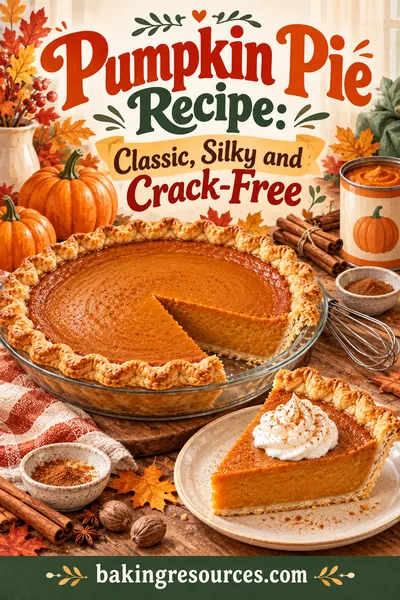 Baking guidePumpkin Pie Recipe: Classic, Silky and Crack-FreeLearn more →
A simple make-ahead plan helps. Shell eggs keep in the fridge for 3 to 5 weeks from the day you buy them, so you can stock up a week or two early. Keep them in their carton on a shelf, not in the door, where the temperature swings every time the fridge opens. If one recipe needs whites and another needs yolks, separate them the day you bake the first recipe and use the leftovers within 2 days, or freeze the whites for later in the season.
Grocery stores are often busy before the holidays, and you may end up with whatever egg size is on the shelf. That is fine. Use the swap chart above, or the calculator, and the recipe will come out the way it was written. If you run short of eggs entirely, the egg substitute guide covers which swaps work in which bakes, and boxed mixes can be made eggless too, as shown in how to make cake mix without eggs.
Egg sizes in UK, European and metric recipes
If you bake from British, European or Australian recipes, egg sizes do not line up with American ones. The names are the same, but the eggs are not.
In the UK and the European Union, eggs are graded by the weight of each egg in the shell, not by the weight of a dozen. A medium egg there weighs 53 to 63 grams in the shell, and a large egg weighs 63 to 73 grams. An American large egg averages about 57 grams in the shell, so it sits at the small end of a European medium.
In practice that means:
- A UK or European recipe that says "medium eggs" is close to American large eggs. Use the same number.
- A UK or European recipe that says "large eggs" means bigger eggs than American large, close to American extra large. Use extra large, or add about 1 tablespoon of beaten egg for every 2 large eggs you use.
- A recipe that gives eggs in grams sidesteps the problem. Crack and weigh. Many metric recipes list something like "150 g eggs (about 3)," and the gram number is the one to follow.
Australia and other countries use their own size labels again, so the same word can mean a different egg. If a recipe from another country matters, weighing is the easy fix. Whatever the country, if the recipe gives grams, trust the grams over the egg count.
Using carton eggs and liquid egg whites
Cartons of liquid whole eggs and liquid egg whites are handy when you need eggs by the cup, since you can pour straight into the measuring cup and skip the cracking. A few things to know:
- Follow the carton's conversion. Most liquid egg products print how much equals one egg, and many say 1/4 cup equals one large egg. That is a bit more than the 50 grams in a real large egg, but close enough for most baking.
- Liquid whites are usually pasteurized. Pasteurized whites often take longer to whip and may not reach as stiff a peak, especially for meringues. Adding a pinch of cream of tartar helps. For angel food cake and macarons, fresh whites separated from shell eggs are more dependable.
- Egg substitutes are not the same as liquid eggs. Some cartons labeled "egg substitute" are mostly egg whites with added color and vitamins. They work in many cakes and muffins, but custards and pie fillings may set differently because there is little or no yolk fat.
- Watch the date once opened. An opened carton of liquid egg should be used within the time printed on the package, often just a few days. Keep it cold and never leave it out on the counter.
Carton eggs are a good choice when you need a lot of egg at once, like a big batch of custard or a breakfast casserole for a crowd. For recipes that need eggs separated, shell eggs give you more control.
Common mistakes when measuring eggs by the cup
- Measuring unbeaten eggs. Whole eggs sit unevenly in a cup and the whites slide around. Beat lightly first.
- Measuring the foam. Heavily whisked eggs look like more than they are. Measure before you whip, or let the foam settle.
- Assuming every egg is a large egg. Check the carton. If it says jumbo or medium, use the swap chart.
- Counting instead of weighing for meringues and macarons. These are the bakes where a few extra grams of white make a visible difference.
- Getting yolk in the whites. Even a speck of yolk can keep whites from whipping. Separate each egg over a small bowl before adding it to the rest.
- Leaving extra egg in the fridge too long. Use leftover raw egg within 2 days, or freeze it.
- Mixing up "1 cup of eggs" and "1 cup of whites." A recipe that needs a cup of whites needs about 8 large eggs separated, not 5 whole eggs. Read the line twice before you start cracking.
- Cracking straight into the batter. Crack each egg into a small cup first. If a piece of shell falls in or the egg looks or smells off, you lose one egg instead of the whole bowl.
- Tasting the batter to check it. Raw eggs can carry Salmonella. Skip the spoon-lick and check doneness in the oven instead.
Questions people ask
How many large eggs make 1 cup?
About 5 large eggs make 1 cup once they are cracked and lightly beaten. A large egg is about 50 grams out of the shell, and a cup of beaten egg weighs about 240 grams, so 5 eggs give you about 250 grams, close enough for any recipe. If the cup comes up a little short with your eggs, beat one more and add just enough to reach the line.
How many egg whites are in a cup?
About 8 large egg whites make 1 cup. Each large white is about 30 grams, or 2 tablespoons. With other sizes you need about 11 small, 9 medium, 7 extra large or 6 jumbo whites. For angel food cake and meringues, weighing the whites is more reliable than counting, since a cup of whites should weigh about 240 grams.
How many egg yolks are in a cup?
About 13 large egg yolks make 1 cup. A large yolk is about 18 grams, a little more than 1 tablespoon. Yolks vary more than whites, so crack 13, check the cup, and add another if needed. With jumbo eggs it takes about 11 yolks, and with medium eggs about 15.
How many tablespoons is one egg?
One large egg, beaten, is about 3 1/4 tablespoons, often rounded to 3 tablespoons. The white is about 2 tablespoons and the yolk is a generous tablespoon. A medium egg is about 3 tablespoons, and a jumbo egg is about 4 tablespoons, which is 1/4 cup.
Does a cup of eggs weigh the same as a cup of water?
Very nearly. A cup of water weighs about 237 grams, and a cup of beaten egg, egg whites or egg yolks weighs about 240 grams. That is why it is easy to convert eggs between cups and grams: treat 1 tablespoon of egg as about 15 grams and 1 cup as about 240 grams. The small difference does not matter in home baking.
Can I use jumbo eggs instead of large eggs?
Yes, but adjust when the recipe uses three or more eggs. For 1 or 2 large eggs, use the same number of jumbo eggs. For 3 large eggs, use 2 jumbo plus about 1 1/2 tablespoons of beaten egg. For 4 or 5 large eggs, use 3 or 4 jumbo. Custards and sponge cakes are the most sensitive, so weigh the eggs for those.
What size egg do recipes use if they do not say?
Almost all American recipes are written for large eggs unless they say otherwise. That means about 50 grams of egg out of the shell per egg. If you use a different size, use the swap chart or the calculator on this page to match the amount the recipe expects.
How do I measure half an egg?
Crack the egg into a small bowl and beat it until the white and yolk are completely mixed. Then measure out about 1 1/2 tablespoons plus 1 teaspoon, or weigh 25 grams for half a large egg. Cover and refrigerate the rest, use it within 2 days, or brush it on a pie crust or bread as an egg wash.