
Classic Pecan Pie Recipe

A great pecan pie comes down to three things: a cold, flaky crust, a filling of eggs, corn syrup and sugar mixed gently so it bakes into a smooth, gooey custard, and enough patience to let it cool before you slice. This version bakes at 350°F for 60 to 70 minutes in a standard 9 inch pan, and it's done when the center reaches about 200°F.
Plan on about six and a quarter hours from start to slicing, but most of that is chilling and cooling while you do other things. The recipe card below scales the pie for any pan size or number of pies, switches between cups and grams, and builds a timeline for you.
Recipe card
Pecan Pie recipe
Pick your pie pan and how many you need. Every amount, the bake time and your start time update for you.
More free baking tools



Why This Pecan Pie Recipe Works
Pecan pie filling is really a sweet custard. Three eggs give it just enough structure to set, while a cup of corn syrup and a cup of sugar keep it soft and glossy instead of firm like a quiche. The ratio matters: too few eggs and the filling never sets, too many and it turns rubbery and cracks. This balance gives you a center that slices cleanly but still feels gooey on the fork.
The other big win is gentle heat. Baking at a steady 350°F with the rack in the lower third cooks the bottom crust before the filling soaks into it, while the top bakes slowly enough that the eggs don't curdle. If your oven only shows Celsius or gas marks, the oven temperature conversion chart gives you the exact match. And because the recipe gives every ingredient in grams too, you can weigh everything for the same result every time.
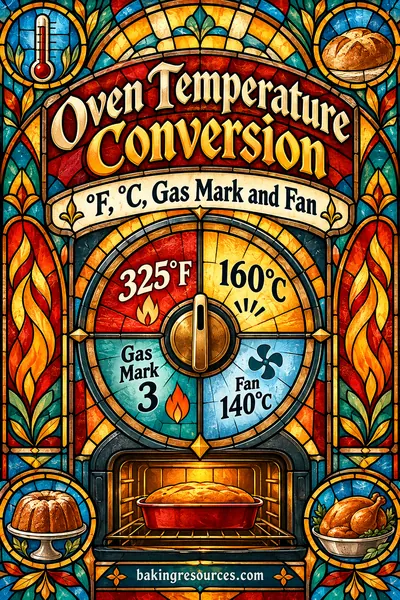 Free toolOven Temperature Conversion: °F, °C, Gas Mark and FanGet my number →
The Ingredients and What Each One Does
For the crust
All-purpose flour gives the crust its body, and a spoonful of sugar helps it brown. Cold butter is the star: small pieces melt in the oven and release steam, which pushes the layers apart and makes the crust flaky. The trick of keeping those pieces about pea-sized is covered step by step in how to cut butter into flour. Ice water just holds the dough together, so add it slowly. Too much water plus too much handling is the main reason a crust bakes up hard, which you can read more about in why pie crust turns tough.
 Baking guideHow to Cut Butter Into Flour for Flaky Pastry Every TimeSee how it's done →
 Baking guideWhy Is My Pie Crust Tough? Causes and Fixes That WorkSee what went wrong →
For the filling
- Eggs: They set the filling. Use large eggs, since the recipe counts on about 150 grams for three.
- Light corn syrup: This keeps the sugar from turning grainy and gives the classic shiny, gooey texture. The full story is in what corn syrup is and when you need it.
- Granulated sugar: It adds sweetness and helps the top form a thin, crackly layer over the nuts.
- Melted butter: Just 2 tablespoons adds richness without making the filling greasy.
- Vanilla and salt: Small amounts, big job. Salt keeps the pie from tasting flat and one-note sweet.
- Pecan halves: They float to the top as the pie bakes and toast into a crunchy lid.
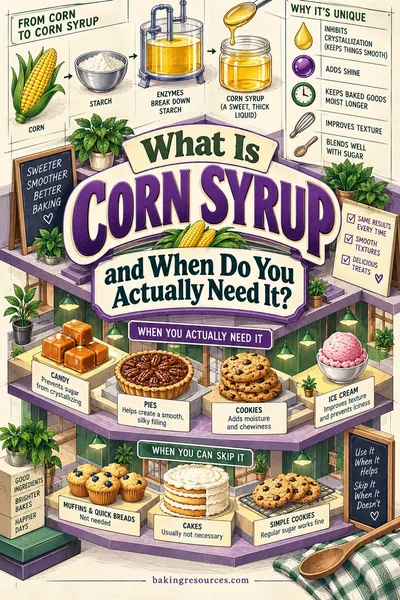 Baking guideWhat Is Corn Syrup and When Do You Actually Need It?Read it next →
Easy swaps
If you're out of light corn syrup, dark corn syrup works one for one and gives a deeper, more caramel-like flavor. Golden syrup also swaps evenly and tastes buttery. Pure maple syrup works too, but it's thinner, so the filling sets a little softer and may need a few extra minutes. Honey is very sweet and browns fast, so use it for no more than half of the syrup. Swapping half the white sugar for packed brown sugar adds a gentle molasses note. For other swaps, like a different butter or egg option, see the baking substitutions chart.
 Free toolBaking Substitutions: Exact Ratios for 41 IngredientsConvert it now →
| Instead of 1 cup light corn syrup | Amount | What changes |
|---|---|---|
| Dark corn syrup | 1 cup | Deeper color, light caramel flavor |
| Golden syrup | 1 cup | Buttery flavor, sets about the same |
| Pure maple syrup | 1 cup | Softer set, may need 5 to 10 more minutes |
| Half honey, half corn syrup | 1/2 cup each | Floral taste, top browns faster |
Step-by-Step Tips (What to Look and Feel For)
Making the dough
Keep everything cold, including your hands if you can. After you add the water, squeeze a bit of dough in your fist. If it holds together without crumbling, stop adding water. The dough should look a little shaggy with visible flecks of butter, not smooth like play dough. Those flecks are what make it flaky.
Chilling and rolling
The hour in the fridge lets the flour soak up the water evenly and firms up the butter again. When you roll it out, the dough should feel cool and bend without cracking at the edge. If it cracks, let it sit on the counter for a few minutes. If it gets sticky or soft, slide it back in the fridge. Chilling the shaped shell for 30 minutes keeps the crimped edge from slumping in the oven.
Mixing the filling
Whisk the eggs just until the yolks and whites are blended, then stir in the rest slowly. You want a smooth, glossy mix with almost no foam. Beaten-in air rises to the top and bakes into a pale, puffy layer that cracks as it cools. For extra flavor, toast the pecans first and let them cool. The guide to toasting nuts has timing so they don't burn, since they'll bake again in the pie.
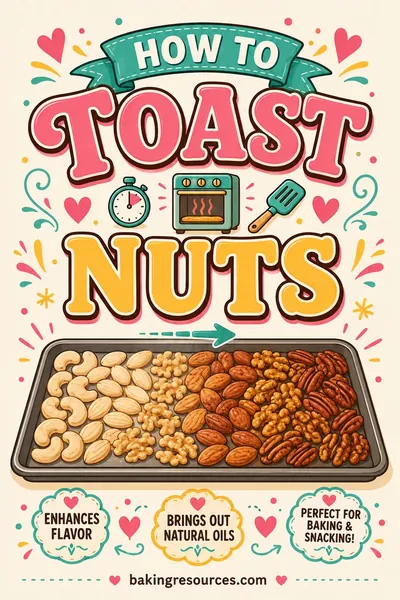 Baking guideHow to Toast Nuts: Times by Type and the 1-Minute RuleRead the step by step →
Baking
Set the pie on a rimmed baking sheet to catch any drips. Around the 30-minute mark, check the crust edge. If it's already golden brown, cover it with a foil ring. Near the end, the filling will puff up, sometimes quite a bit, and then sink back down as it cools. That's normal.
How to Tell Pecan Pie Is Done
The most reliable sign is temperature. Slide an instant-read thermometer into the center of the filling, between the pecans. At about 200°F, the eggs have set enough for clean slices. You can also give the pan a gentle nudge: the edges should look firm and puffed, and only the very center (about the size of a half dollar) should wobble slightly, like set gelatin, not wave like liquid.
Don't use the knife test here. A knife pushed into pecan pie almost never comes out clean, even when the pie is fully baked, because the sugary filling sticks to it. Going by that test is how many pies end up overbaked and cracked.
Why Pecan Pie Turns Out Runny
A runny pie usually comes from one of three things. The most common is cutting it too soon. The filling keeps setting as it cools, so slicing a warm pie lets the center flow out even when it was baked right. Give it the full 3 hours at room temperature. The second cause is pulling it from the oven before the center reaches 200°F. Ovens run hot or cold, so the thermometer is more honest than the timer. The third is measuring: too much syrup or too few eggs throws off the balance. Weighing your syrup with a scale, or checking amounts with the grams to cups converter, keeps the ratio right.
 Free toolGrams to Cups Converter (Ingredient-Aware)Run my numbers →
Bake Times by Pan Size
The recipe card lets you pick your pan and scales the ingredients for you. Here's the same information at a glance. If you're not sure what size your pan is, measure across the top from inside edge to inside edge, or check the pie pan size guide.
 Baking guidePie Pan Sizes: Standard, Deep Dish and Tart Pan GuideSee the sizes →
| Pan | Recipe amount | Slices | Bake at 350°F |
|---|---|---|---|
| 8 inch pie pan | 0.75x | 6 | 50 to 60 min |
| 9 inch standard pie pan | 1x | 8 | 60 to 70 min |
| 10 inch pie pan | 1.3x | 10 | 65 to 75 min |
| 9 inch deep-dish pie pan | 1.25x | 10 | 70 to 80 min |
Baking for a crowd? The card handles up to four pies at once, and the recipe converter can scale any other recipe on your holiday menu the same way. Whatever the pan, the 200°F center temperature still tells you it's done.
 Free toolRecipe Converter: Halve, Double or Scale Any RecipePlug in my recipe →
Make-Ahead Timeline for Thanksgiving
Pecan pie is one of the best holiday desserts to make early, since it needs to cool fully anyway. Here's a stress-free plan:
| When | What to do |
|---|---|
| Up to 1 month before | Make the dough, shape it into a disk or fitted shell, and freeze it |
| Up to 2 days before | Make the dough and keep it wrapped in the fridge |
| 1 to 2 days before | Roll, fit and chill the crust, then bake the pie |
| Same day (morning) | Or bake it early in the day so it has 3 hours to cool |
| 30 to 60 minutes before serving | Take a chilled pie out of the fridge so the filling softens a little |
Freezing the dough ahead is a real time saver. The guide to freezing pie dough shows how to wrap disks and shells and how to thaw them so they roll out without cracking.
 Baking guideHow to Freeze Pie Dough: Discs, Shells, and ThawingSee the timing chart →
How to Store and Freeze Pecan Pie
Because the filling is made with eggs, pecan pie belongs in the fridge once it has cooled. Cover it loosely with plastic wrap or foil and it will keep for up to 4 days. Many people like it cold, when the filling is extra fudgy. To serve it warm, heat slices in a 300°F oven for about 10 minutes.
Pecan pie also freezes well. Let it cool completely, chill it for a few hours so the filling firms up, then wrap it tightly in plastic wrap and a layer of foil. It keeps for up to 3 months. Thaw it overnight in the fridge, still wrapped, so condensation doesn't make the top sticky. For general rules on counter, fridge and freezer storage, see how to store baked goods.
Pecan Pie Troubleshooting
| Problem | Likely cause | Fix next time |
|---|---|---|
| Runny center | Cut while warm, or underbaked | Bake to 200°F and cool a full 3 hours |
| Cracked top | Overbaked, or too much air whisked in | Stir gently and pull it at 200°F |
| Soggy bottom crust | Rack too high, or thin spots in the dough | Bake in the lower third; roll evenly |
| Crust edge too dark | Edge exposed the whole bake | Add a foil shield after 30 minutes |
| Grainy filling | Sugar not fully mixed in | Whisk until the mix looks glossy and smooth |
| Foamy, pale layer on top | Eggs beaten too hard | Whisk just to blend, not until frothy |
| Filling bubbled over | Pan too small, or pan overfilled | Match the pan to the card; bake on a sheet pan |
If soggy bottoms keep happening in your oven, you can bake the empty shell for a few minutes before filling it. The steps are in how to blind bake a pie crust. Just let the shell cool a bit before pouring in the filling.
High Altitude Pecan Pie
Above 3,000 feet, the filling can boil and foam before the eggs set. Lower the oven to 325°F and bake 10 to 15 minutes longer. Go by the thermometer, not the clock: 200°F in the center still means done. For other recipes, the high altitude baking chart lists changes by elevation.
Easy Variations
- Chocolate pecan pie: Scatter about 3/4 cup of chocolate chips over the crust before adding the pecans.
- Maple pecan pie: Use maple syrup for half of the corn syrup and add a pinch of cinnamon.
- Brown sugar pecan pie: Swap the white sugar for packed brown sugar for a toffee-like flavor.
- Chopped pecan pie: Chop half the pecans so every bite has nuts, and keep the rest as halves on top.
- Pecan pie bars: Press the crust into a lined square pan and pour the filling over it for easy squares at a party.
Whichever way you go, keep the eggs, syrup and sugar in the same balance, and the filling will set just like the classic.
Questions people ask
What temperature should pecan pie be when it's done?
Pecan pie is done when the center of the filling reaches about 200°F on an instant-read thermometer. At that point the eggs have set enough for clean slices once the pie cools. The edges should look puffed and firm, and only a small spot in the middle should wobble slightly when you nudge the pan.
Why is my pecan pie runny?
Most runny pecan pies were cut too soon. The filling keeps setting as it cools, so give it at least 3 hours at room temperature before slicing. Other causes are pulling the pie before the center reaches 200°F, or measuring the syrup or eggs off so the filling has too much liquid for the eggs to hold.
Can I make pecan pie without corn syrup?
Yes. Golden syrup swaps one for one and sets almost the same way. Pure maple syrup also works cup for cup, but it's thinner, so the filling comes out a little softer and may need 5 to 10 extra minutes in the oven. Honey browns fast and tastes strong, so use it for no more than half of the syrup.
Does pecan pie need to be refrigerated?
Yes. The filling is made with eggs, so once the pie has cooled completely, cover it and keep it in the fridge. It stays good for up to 4 days. Take it out 30 to 60 minutes before serving if you like a softer filling, or warm slices in a 300°F oven for about 10 minutes.
How far ahead can I make pecan pie for Thanksgiving?
You can bake it 1 to 2 days ahead and keep it in the fridge, which is often easier than baking on the holiday itself. The crust dough can be made up to 2 days ahead and chilled, or up to a month ahead and frozen. Baked pecan pie also freezes for up to 3 months if you want to get way ahead.
Do I need to blind bake the crust for pecan pie?
No, this recipe goes into an unbaked, chilled shell. Baking on a rack in the lower third of a 350°F oven cooks the bottom crust through during the long bake. If your oven tends to give you soggy bottoms, you can briefly bake the empty shell first, then let it cool a bit before adding the filling.
Why did my pecan pie crack on top?
Cracks usually mean the pie baked a little too long, so the eggs tightened and pulled apart as the filling cooled. Whisking the eggs too hard can also cause it, since the extra air puffs up and then sinks. Pull the pie when the center reaches 200°F and whisk the filling just until smooth.