
Monster Cookies

Monster cookies are big, chewy peanut butter oatmeal cookies packed with M&M's and chocolate chips, and the classic version has no flour at all. Oats do the job flour usually does, peanut butter brings the richness, and a short rest lets the oats soak up the dough so the cookies bake up thick and soft. Bake them at 350°F for 10 to 12 minutes.
From the first scoop of peanut butter to cookies on the rack, you'll need a little under 2 hours, and only about 25 minutes of that is hands-on. One batch makes about 36 classic-size cookies, which is plenty for a cookie tray, a bake sale or a very happy family.
Want lunchbox-size cookies or giant ones? Pick your scoop in the recipe card below. It'll change the count and bake time, scale the batch up or down, and switch everything to grams.
Recipe card
Monster Cookies recipe
Pick your cookie scoop size and how many you need. Every amount, the bake time and your start time update for you.
More free baking tools



What are monster cookies?
Think of a peanut butter cookie, an oatmeal cookie and a chocolate chip cookie all piled into one. That's a monster cookie. They're a Midwest bake-sale classic, and the name fits: the cookies are big, the dough is loaded, and old family recipes often call for a dozen eggs and a whole jar of peanut butter. This version is sized for a normal kitchen and a normal mixer, but you can still double or triple it in the recipe card.
The texture is the best part. Good monster cookies have slightly crisp, golden edges, a soft and chewy middle, and so many mix-ins that every bite has a little candy crunch.
Do monster cookies have flour?
Classic monster cookies don't, and this recipe doesn't either. The rolled oats soak up the eggs and peanut butter and hold the cookie together, and the peanut butter adds enough body that you won't miss the flour. It also means the cookies stay soft and chewy longer than most.
Good news if you're baking for someone who avoids gluten: with certified gluten-free oats, this can be a gluten-free cookie. Oats are often processed alongside wheat, so the label matters. Check your chocolate chips and candies too, since some seasonal varieties are made on shared lines.
The ingredients and why they matter
Peanut butter
Use regular creamy peanut butter, the kind that doesn't separate in the jar. Natural peanut butter is runnier and oilier, and it makes the cookies spread flat and greasy. Crunchy peanut butter works fine if you like extra texture. Just skip the natural kind.
Butter
Only one stick, because the peanut butter is already rich. Soft butter should dent when you press it but still hold its shape. If it's melty, the cookies spread.
Oats
Old-fashioned rolled oats give the best chew and that classic bumpy look. Quick oats work too: the cookies come out a bit softer and more uniform, and they spread a touch less. Don't use steel-cut oats. They stay hard and gritty because they never soften in the short bake.
Sugars
Mostly brown sugar for moisture and a caramel-y flavor, plus some white sugar for crisp edges. Want a softer, chewier cookie? Swap the white sugar for more brown sugar. Want crispier edges? Do the opposite. Our guide to chewy vs crispy cookies walks through every lever.
 Baking guideHow to Make Cookies Chewy or Crispy: The 8 Real LeversRead it next →
Baking soda
Two teaspoons sounds like a lot, but without flour the dough needs that lift and spread to bake into a proper cookie instead of a dense mound. It also helps the edges brown.
M&M's and chocolate chips
One cup of each is the classic mix. Stir most of them in, then press a few extra M&M's into the tops right before baking. Candies buried inside the dough hide; the ones on top give monster cookies their happy, polka-dot look.
Why rest monster cookie dough?
Honestly, this is the step most recipes skip, and it's the one that makes the biggest difference. Right after mixing, the oats are dry and the dough is loose. Give it 30 minutes on the counter (or a night in the fridge) and the oats soak up some of the moisture. The cookies bake up thicker, chewier and less greasy, and the flavor gets a little deeper. Here's more on why resting cookie dough works.
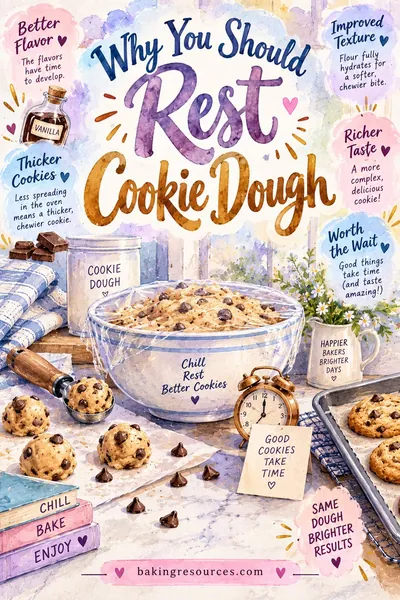 Baking guideResting Cookie Dough: Why Time Makes Better CookiesRead the dough guide →
If the dough has been in the fridge, let the scooped balls sit out 10 to 15 minutes before baking so they spread a little instead of staying in tall lumps.
How big should monster cookies be?
As big as you like. Every size uses the same dough; only the count and bake time change.
| Scoop | Dough per cookie | Cookies per batch | Bake at 350°F | Best for |
|---|---|---|---|---|
| 2 tablespoon | about 34 g | 52 | 9 to 10 minutes | Lunchboxes, cookie trays, kids |
| 3 tablespoon | about 50 g | 36 | 10 to 12 minutes | Everyday, bake sales |
| 1/4 cup | about 68 g | 26 | 12 to 14 minutes | Giant bakery-style cookies |
A cookie scoop makes life easier here, because the dough is sticky and full of lumps. Bake one tray at a time on the middle rack. If you bake two at once, swap and turn the trays halfway through.
How do you know when monster cookies are done?
Pull them when the edges are lightly golden and the centers still look puffy, shiny and a little underbaked. That feels too early the first time. Trust it. They keep cooking on the hot tray and settle into a soft, chewy middle as they cool. If you wait until the centers look dry in the oven, you'll have crunchy cookies by the next day.
Leave them on the sheet 5 to 10 minutes before moving them. Without flour, warm monster cookies are fragile and can break if you rush them onto the rack.
Fun mix-in swaps for every holiday
Monster cookies are a great "clean out the pantry" cookie. Keep the total mix-ins at about 2 cups per batch and swap freely.
- Christmas: red and green M&M's plus white chocolate chips.
- Halloween: orange and brown candies, or chopped mini peanut butter cups.
- Easter and spring: pastel candies and white chips.
- Fourth of July: red, white and blue candies.
- Everyday swaps: peanut butter chips, butterscotch chips, raisins, chopped peanuts or mini M&M's (they spread more evenly through smaller cookies).
Common monster cookie mistakes
| What happened | Why | The fix |
|---|---|---|
| Flat, greasy cookies | Natural peanut butter, melty butter, or no rest | Use regular creamy peanut butter, soft (not melted) butter, and rest the dough 30 minutes. |
| Dry, crumbly cookies | Baked too long, or oats packed into the cup | Pull them while the centers look soft, and spoon the oats in loosely (400 g is exact). |
| Tall, round lumps that didn't spread | Dough was straight from the fridge | Let cold dough sit out 10 to 15 minutes, or flatten each ball slightly with your palm. |
| Cookies fell apart moving them | Moved while hot | Cool 5 to 10 minutes on the sheet first. |
| Candy shells cracked and colors ran | Normal in a hot oven, worse on bigger cookies | Press the top candies in right before baking, not earlier, and don't overbake. |
Can you make monster cookies without peanut butter?
Yes, for a nut-free kitchen, sunflower seed butter is the closest swap, cup for cup. One heads-up: sunflower seeds react with baking soda and the insides of the cookies can turn green as they cool. It's completely harmless and it doesn't change the taste. Also swap regular M&M's for a nut-free chocolate candy, and check every label if you're baking for a nut allergy.
Almond butter works as well, though it's usually oilier, so the cookies spread a bit more. Chill the dough instead of resting it on the counter.
Make-ahead, storage and freezing
Making the dough ahead
The dough keeps up to 3 days covered in the fridge. For longer, scoop it into balls, freeze them on a tray until firm and bag them for up to 3 months. Bake from frozen at 350°F, adding 1 to 2 minutes. The full flash-freeze method is in how to freeze cookie dough.
 Baking guideHow to Freeze Cookie Dough: Flash Freeze, Then Bag ItCheck the rise times →
Storing baked cookies
Keep them in an airtight container at room temperature for up to 5 days. Thanks to the peanut butter and brown sugar, they stay soft longer than most cookies. A slice of bread in the container helps keep them chewy.
Freezing baked cookies
Monster cookies freeze beautifully for up to 3 months. Freeze them in a single layer first, then stack them in a bag or container. Thaw on the counter for about 30 minutes, or warm one for 10 seconds in the microwave for that fresh-baked feel.
Are monster cookies good for gifting and bake sales?
They're one of the best. They're sturdy, colorful, stay soft for days and they travel well. For bake sales, bag them in twos or threes with the M&M side facing out. For holiday tins, pair them with something red and soft, like these red velvet cookies, and something crisp and buttery for contrast. If you're filling tins for the whole street, this guide on how many cookies to bake for neighbor gift tins helps you plan how many batches you need.
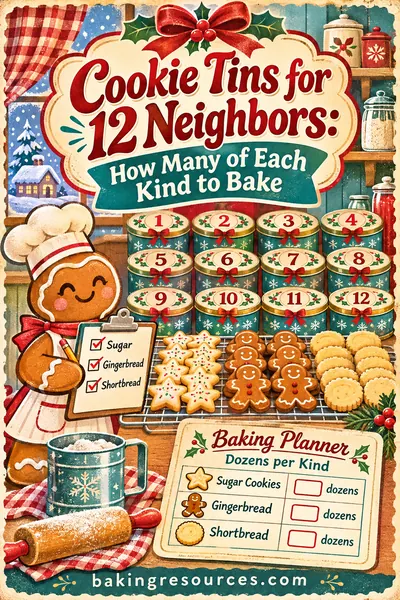 Baking guideCookie Tins for 12 Neighbors: How Many of Each Kind to BakeRead the guide →
Questions people ask
Why are they called monster cookies?
Because everything about them is big. The cookies are large, the dough is packed with peanut butter, oats, chocolate chips and candy, and old family recipes often made huge batches with a dozen eggs. They're a longtime Midwest bake-sale favorite, and the name stuck.
Are monster cookies gluten-free?
Classic monster cookies have no flour, so they can be gluten-free if you use oats labeled certified gluten-free. Regular oats are often processed alongside wheat. Check the labels on your chocolate chips and candies too, especially seasonal ones, if you're baking for someone with celiac disease.
Can I use quick oats in monster cookies?
Yes. Quick oats make a slightly softer, more even cookie that spreads a little less. Use the same amount. Old-fashioned rolled oats give more chew and the classic bumpy look, so they're the first pick, but either one works. Skip steel-cut oats, which stay hard.
Why did my monster cookies come out flat?
The usual causes are natural peanut butter, butter that was too soft, or skipping the rest. Natural peanut butter is oily and makes the dough spread. Use regular creamy peanut butter, butter that dents but isn't greasy, and let the dough rest 30 minutes so the oats soak up some moisture before baking.
How long do monster cookies stay fresh?
They keep about 5 days in an airtight container at room temperature and stay soft longer than most cookies, thanks to the peanut butter and brown sugar. For longer storage, freeze the baked cookies for up to 3 months, or freeze scooped dough balls and bake them as you need them.
Can I add flour to monster cookies?
You can, though you don't need to. Adding about 1/2 cup of all-purpose flour gives a slightly sturdier, more cakey cookie that spreads less. If you add it, the cookies won't be gluten-free anymore. At high altitude, a couple of tablespoons of flour helps keep them from spreading thin.