
Sourdough Starter Recipe: How to Make One From Scratch in 7 Days

The simplest sourdough starter recipe is flour and water, stirred and fed once a day for about a week, until the mixture doubles, bubbles and smells pleasantly sour. Whole wheat or rye flour on day 1 helps it get going, then you switch to a simple 1:1:1 feeding.
It takes about 5 minutes a day for 7 days or a bit longer. Once you have it, you can bake bread, pancakes and crackers for years.
The card is set for one 30 g feeding. Need a bigger feed for baking day? Use the size menu. Below you'll find a day-by-day table, the 1:1:1 ratio explained and a troubleshooting guide.
Recipe card
Sourdough Starter From Scratch recipe
Pick your feeding and how many you need. Every amount, the bake time and your start time update for you.
More free baking tools



Day-by-day guide
| Day | What to do | What you may see |
|---|---|---|
| Day 1 | Mix 60 g whole grain flour with 60 g water | A thick paste |
| Day 2 | Rest, no feeding | A few bubbles, or nothing yet |
| Day 3 | Keep 30 g, feed with 30 g flour and 30 g water | More bubbles, maybe a sour smell |
| Days 4 to 6 | Feed once a day the same way | Rising and falling, stronger smell |
| Day 7 | Test for doubling | Doubles in 4 to 8 hours, domed and bubbly |
Timing varies a lot with the temperature of your kitchen, so don't worry if yours is slower.
The 1:1:1 feeding ratio
1:1:1 means equal weights of starter, flour and water. You keep a small amount of starter, discard the rest and feed it. Weighing is the most reliable way to do it. Here are some common feedings:
| Starter | Flour | Water | Use for |
|---|---|---|---|
| 30 g (2 tbsp) | 30 g (1/4 cup) | 30 g (2 tbsp) | Daily or weekly upkeep |
| 60 g | 60 g | 60 g | A small bake-ready feed |
| 100 g | 100 g | 100 g | One loaf of bread |
| 150 g | 150 g | 150 g | Two loaves |
Want a stiffer starter? See stiff starter ratio.
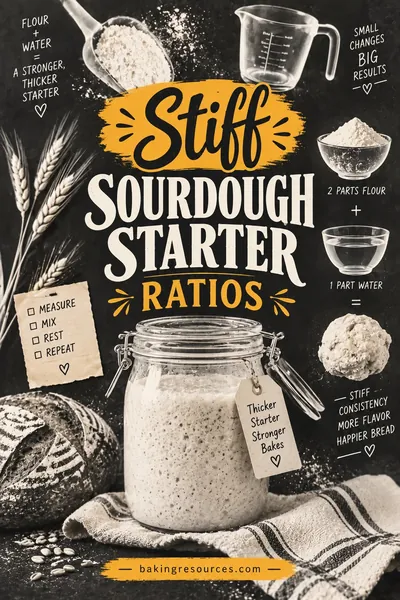 Baking guideStiff Sourdough Starter Ratios: Feeding Chart and CalculatorSee the timing chart →
Why do you discard starter?
Without discarding, the jar would grow quickly and you'd need huge amounts of flour. Discarding keeps the amount small and the mix fresh. Early discard isn't used; once the starter is active, put the discard to use in our sourdough discard recipes.
 Baking guideSourdough Discard Recipes: Pancakes + 12 Easy IdeasGet the proofing tips →
How to tell if your starter is ready
- It doubles within 4 to 8 hours of a feeding.
- It's bubbly all the way through, with a domed top.
- It smells pleasantly sour or yeasty, not like nail polish remover.
- A spoonful floats in water (this isn't foolproof, so judge by the rise too).
More detail in how to tell if sourdough starter is ready.
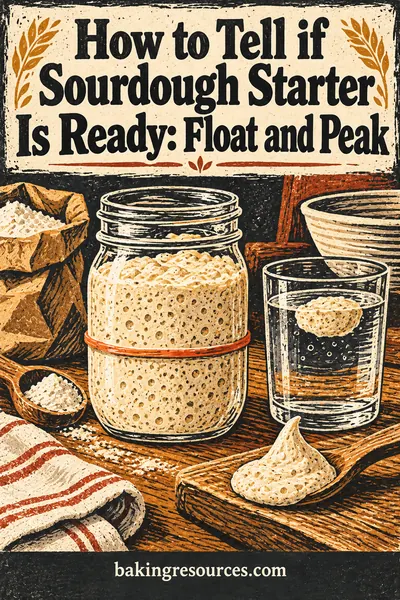 Baking guideHow to Tell if Sourdough Starter Is Ready: Float and PeakCheck the rise times →
Troubleshooting your starter
| Problem | What it means | What to do |
|---|---|---|
| No bubbles for days | Too cool, or just slow | Move it somewhere warm, 75 to 80°F, and keep feeding |
| Liquid on top (hooch) | Hungry starter | Stir it in or pour it off, then feed |
| Strong sharp smell | Very hungry or old | Feed more often |
| Pink, orange or fuzzy mold | Contamination | Throw it out and start over with a clean jar |
Best flour and water for starters
Whole wheat or rye flour starts a starter fastest. After that, bread or all-purpose flour is fine. Use lukewarm, filtered water if your tap water has a strong chlorine smell. Use a clean glass jar, and don't screw the lid tight, because gases need to escape.
Storing your starter
- Countertop: feed once or twice a day for regular baking.
- Fridge: feed once a week. Take it out and feed it a day before baking.
- Vacation: a fed starter keeps in the fridge for a couple of weeks. Feed it when you come back.
What to bake with your starter
- A crusty loaf: sourdough bread recipe.
- Rising help: sourdough rise time.
- Convert favorites: convert a yeast recipe to sourdough.
- Pizza night: pizza dough recipe.
 Baking guideHow Long Sourdough Takes to Rise: Full Timing ChartRead the dough guide →
 Baking guideConvert Yeast Recipe to Sourdough: Starter, Flour and TimingRead it next →
Common starter mistakes
- Using a tight lid: let gas escape.
- Giving up too soon: some starters take 2 weeks.
- Skipping the scale: measuring by weight is more reliable.
- Using it before it's ready: the bread won't rise well.
Sourdough Starter From Scratch measures in grams
One feeding and the first-day mix:
| Ingredient | US measure | Weight |
|---|---|---|
| existing starter (leave it in the jar) | 2 tbsp | 30 g |
| all-purpose or bread flour | 1/4 cup | 30 g |
| lukewarm water, filtered if your tap water is heavily chlorinated | 2 tbsp | 30 g |
| whole wheat or rye flour | 1/2 cup | 60 g |
| lukewarm water | 1/4 cup | 60 g |
Convert more with the grams to cups converter.
 Free toolGrams to Cups Converter (Ingredient-Aware)Do the math for me →
Questions people ask
How long does it take to make a sourdough starter?
Most starters become active in 7 to 14 days. Cool kitchens take longer, and warm ones are faster.
What is the 1:1:1 feeding ratio?
It's equal weights of starter, flour and water. For example, 30 g starter, 30 g flour and 30 g water. It's an easy ratio for a daily feeding.
Why is my starter not bubbling?
Common reasons are a cool kitchen, flour without much life in it, or not enough time. Move it somewhere warmer (70 to 80°F), use whole grain flour and keep feeding.
What if there is liquid on top of my starter?
That liquid is called hooch. It means the starter is hungry. Stir it in or pour it off, and feed it.
When should I throw away my starter?
If you see pink or orange streaks, or fuzzy mold on top, throw it out and start again. A sour smell and some liquid are normal.
Can I use discard?
Yes, once your starter is active. See our sourdough discard recipes for ideas.