
How Much Juice in One Lemon? Juice and Zest by Size

One medium lemon gives about 2 to 3 tablespoons of juice and about 1 tablespoon of finely grated zest. A small lemon gives closer to 1 1/2 tablespoons of juice, and a big, heavy one can give 3 to 4 tablespoons, which is about 1/4 cup. So if a recipe says "juice of 1 lemon," plan on roughly 2 1/2 tablespoons.
That range matters more than you'd think. Lemon bars, lemon curd, and glazes all depend on the right amount of acid and liquid. Pick your lemon size and how many you have in the calculator below, and it works out both the juice and the zest you can expect, so you know whether to grab one more lemon before you start.
Free calculator
Lemon juice and zest calculator
Pick the size of your lemons and how many you have to see the juice and zest you can expect.
More free baking tools



The quick answer, lemon by lemon
Lemons are not a standard unit, which is why recipes that say "juice of 2 lemons" can turn out a little different every time. The numbers below are the averages most bakers plan around. They assume a fresh lemon at room temperature, squeezed well with a reamer or a handheld press.
| Lemon size | Rough weight | Juice | Finely grated zest |
|---|---|---|---|
| Small | About 3 oz | About 1 1/2 tbsp | About 2 tsp |
| Medium | About 4 oz | 2 to 3 tbsp (plan on 2 1/2) | About 1 tbsp |
| Large | 5 to 6 oz | 3 to 4 tbsp (about 1/4 cup) | About 1 1/2 tbsp |
| Meyer lemon | About 4 oz | 3 to 4 tbsp | About 2 tsp (thinner peel) |
If you only remember one thing, remember this: one medium lemon, about 2 1/2 tablespoons of juice, about 1 tablespoon of zest. Everything else on this page builds from those two numbers. If you like to check your math, our cups to tablespoons chart is handy, since there are 16 tablespoons in a cup.
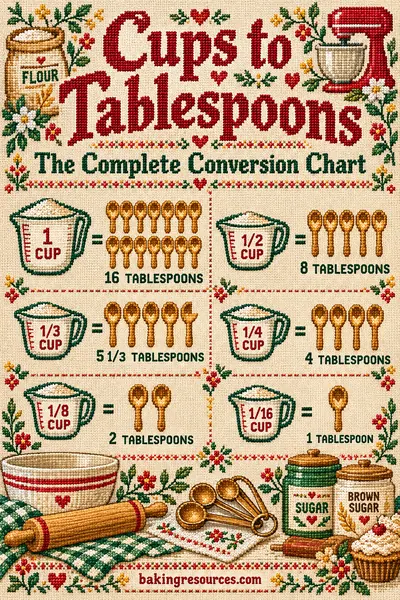 Free toolCups to Tablespoons Converter (Plus Halving Chart)Convert it now →
How many lemons for 1/4, 1/2, or 1 cup of juice
A lot of recipes flip the question around. Lemon bars might want 2/3 cup of juice, and lemon curd often wants 1/2 cup. Here's how many lemons to buy for the common amounts.
| Juice you need | Medium lemons | Large lemons | Zest you'll also get (medium) |
|---|---|---|---|
| 1 tbsp | About 1/2 lemon | About 1/3 lemon | About 1 1/2 tsp |
| 1/4 cup (4 tbsp) | About 2 lemons | 1 to 2 lemons | About 2 tbsp |
| 1/3 cup | 2 to 3 lemons | About 2 lemons | 2 to 3 tbsp |
| 1/2 cup (8 tbsp) | 3 to 4 lemons | 2 to 3 lemons | 3 to 4 tbsp |
| 2/3 cup | 4 to 5 lemons | 3 to 4 lemons | About 1/4 cup |
| 1 cup (16 tbsp) | 6 to 7 lemons | 4 to 5 lemons | About 6 tbsp |
When a recipe gives you a measured amount, always measure it. "Juice of 3 lemons" from a recipe writer with giant lemons could be twice what you get from three small ones. If you're working in milliliters, 1 tablespoon is about 15 ml, and our cups to ml converter covers the bigger amounts.
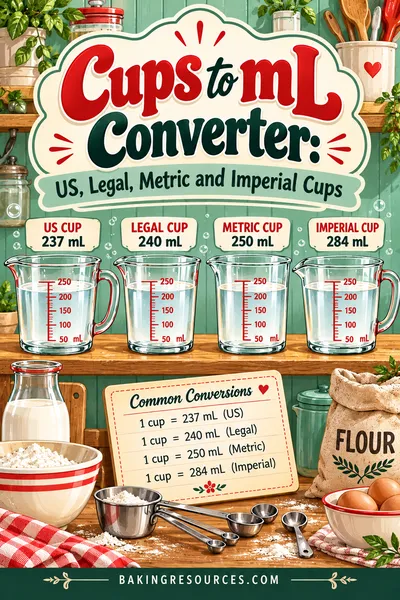 Free toolCups to mL Converter (US, Legal, Metric and Imperial Cups)Work out my amount →
Lemon zest: the part people forget to count
Zest is the thin yellow outer layer of the peel. It holds the lemon's oils, and that's where most of the bright lemon smell and flavor lives. Juice brings sourness. Zest brings the "this really tastes like lemon" part. That's why good lemon cakes and cookies use both.
A medium lemon gives about 1 tablespoon of zest when you use a fine grater and take only the yellow. A small lemon gives about 2 teaspoons, and a large one closer to 1 1/2 tablespoons. If you use a channel zester that makes long strips, the volume looks bigger but it's fluffier, so chop it fine before you measure.
Zest first, juice second
Always zest before you cut and squeeze. Grating a squeezed, floppy lemon half is slow and you'll lose a lot of the peel. Grate the whole lemon, then cut it and juice it. If you don't need the zest today, put it in a small bag in the freezer. It keeps its flavor for a couple of months and goes straight into batter without thawing.
Skip the white part
The white layer under the zest is called the pith, and it's bitter. Stop grating as soon as you see white. A light hand with a fine grater gives you more flavor than pressing hard and digging in.
Limes, Meyer lemons, and other citrus
Limes are smaller and a little less predictable than lemons. A medium regular lime (the kind most stores sell, often called a Persian lime) gives about 1 to 2 tablespoons of juice, so plan on 1 1/2 tablespoons, plus about 1 1/2 teaspoons of zest. That means you'll need about 3 limes for 1/4 cup of juice and 10 to 11 limes for a full cup.
Key limes are tiny. Each one gives only about 2 teaspoons of juice, so a key lime pie that needs 1/2 cup of juice can take 15 to 20 of them, depending on size. Many bakers use bottled key lime juice for that reason, and it works fine in pie filling.
Meyer lemons are rounder, sweeter, and less sour than regular lemons, with thin, smooth skin. They're often juicier, giving 3 to 4 tablespoons each, but the thin peel gives a bit less zest. If you swap Meyer lemons into a regular lemon recipe, the result tastes softer and a little floral. For lemon bars you might want to add a squeeze of regular lemon to keep that tart bite.
How to get the most juice out of a lemon
A cold, hard lemon holds onto its juice. A warm, soft one lets go of it. These simple steps can get you a noticeably bigger yield.
- Bring it to room temperature. Lemons from the fridge give less juice. Leave them on the counter for an hour, or microwave a whole lemon for 10 to 15 seconds until it just feels warm.
- Roll it. Press down hard with your palm and roll the lemon on the counter for 10 seconds. This breaks the little juice sacs inside before you even cut.
- Cut it the long way. Cutting from end to end, instead of across the middle, gives more surface to squeeze.
- Use a tool. A wooden reamer or a hinged hand press gets far more juice than bare hands, and it catches most of the seeds.
- Strain it. Pour the juice through a small strainer to catch seeds and pulp before you measure.
Pick lemons that feel heavy for their size and give a little when you squeeze. A lemon that feels light or rock hard usually has thick peel and less juice.
Worked example: lemon bars for a crowd
Say your lemon bar recipe for a 9x13 pan needs 2/3 cup of fresh lemon juice and 2 tablespoons of zest, and you want to make a double batch for a holiday party.
- Find the total. Doubled, you need 1 1/3 cups of juice and 1/4 cup of zest. In tablespoons, that's about 21 tablespoons of juice and 4 tablespoons of zest.
- Divide by your lemon size. With medium lemons at 2 1/2 tablespoons each, 21 divided by 2 1/2 is about 8 1/2. So you need 9 medium lemons for the juice.
- Check the zest. Nine medium lemons give about 9 tablespoons of zest, far more than the 4 you need. Zest 4 of them for the recipe and freeze the rest of the zest for later.
- Buy one or two extra. Since sizes vary, grab 10 or 11 lemons. A leftover lemon is never wasted.
The same steps work for any recipe. If you're scaling a whole recipe up or down, our guide to scaling a recipe walks through the rest of the ingredients too.
 Baking guideHow to Scale a Recipe Up or Down Without Ruining ItSee how it's done →
Fresh vs bottled lemon juice in baking
Bottled lemon juice measures the same as fresh, so 1 tablespoon replaces 1 tablespoon. The difference is flavor. Bottled juice tastes flatter and sometimes a little bitter, because the bright, fresh notes fade during processing and storage. In a recipe where lemon is the star, like lemon curd, lemon glaze, or lemon bars, fresh is worth the extra minute.
Bottled juice is fine when lemon plays a supporting role. Think of the spoonful of acid that helps steady whipped egg whites, the splash that turns milk into a quick buttermilk substitute, or the little bit that keeps sliced apples from browning in a pie. It's also a good backup when you need lemon juice to react with baking soda, since the acid level is steady. If that chemistry sounds fuzzy, our page on baking soda vs baking powder explains why acid matters for lift.
 Baking guideHow to Whip Egg Whites: Soft, Firm and Stiff PeaksRead the step by step →
 Baking guideButtermilk Substitute: 8 Easy Swaps That Work in BakingPick a substitute →
There is no bottled swap for zest. If you're out of fresh lemons, about 1/2 teaspoon of lemon extract can stand in for 1 teaspoon of zest. It gives the lemon smell without the texture. Our vanilla extract substitute page covers how extracts behave in batters if you're curious.
 Baking guideVanilla Extract Substitute: 9 Swaps and Exact RatiosWhat can I use? →
Common mistakes with lemon juice and zest
Guessing "juice of 1 lemon"
This is the big one. If a lemon curd recipe expects about 1/2 cup of juice and your three small lemons give only 4 1/2 tablespoons, the curd ends up sweet and flat. Measure, and squeeze one more lemon if you're short.
Measuring zest packed down
Zest should be lightly spooned, not pressed into the spoon. Packing it can nearly double the amount and make a cake taste bitter.
Adding lemon juice to warm dairy too fast
Lemon juice can curdle milk and cream. In cheesecake or cream fillings, stir the juice in at the end, after the other ingredients are smooth. For curd, add the juice with the eggs and sugar before heating, and stir the whole time.
Using a reactive pan
Lemon is acidic. Cooking lemon curd in a bare aluminum or unlined copper pan can give it a metallic taste and a gray tint. Use stainless steel or enamel.
Leaving lemon desserts out too long
Lemon curd, lemon meringue pie, and lemon cream fillings contain eggs or dairy. Keep them in the fridge and don't leave them at room temperature for more than 2 hours. Our page on how to store baked goods has the details for each kind of treat.
 Baking guideHow to Store Baked Goods: Counter, Fridge or FreezerSee how long it keeps →
Storing lemons, juice, and zest
Whole lemons last about a week on the counter and 3 to 4 weeks in the fridge in a sealed bag. The bag matters, because lemons dry out and harden in open air.
Fresh-squeezed juice keeps in a covered jar in the fridge for about 3 to 4 days before the flavor starts to fade. For longer storage, freeze it in an ice cube tray. Most standard trays hold about 2 tablespoons per cube, but check yours by filling one cube with water and measuring it. Frozen juice cubes keep well for about 3 to 4 months.
Zest dries out fast in the fridge. Freeze it flat in a small bag, and break off what you need. It's handy to have on hand for quick batches of cookies.
Lemon in holiday and winter baking
Here's a nice surprise: lemons are at their best in winter. Regular lemons are around all year, but Meyer lemons usually show up in stores from about December through March, right when holiday baking is in full swing. That makes winter a great time to stock up and freeze juice and zest.
Lemon brightens rich holiday food. A lemon glaze on a pound cake cuts through a heavy Thanksgiving dinner. Lemon crinkle cookies and lemon shortbread add a fresh flavor to a cookie tray full of chocolate and spice, and many of them hold up well in the freezer if you follow our list of Christmas cookies that freeze well. Lemon zest also pairs well with cranberries, so a teaspoon in cranberry muffins or cranberry bread gives them a lift.
 Baking guideChristmas Cookies That Freeze Well and How to Do ItRead the storage guide →
If you're baking several lemon recipes for the holidays, add up the juice and zest for all of them first, then use the calculator above to count lemons. One shopping trip beats three.
Questions people ask
How much juice is in one lemon?
One medium lemon gives about 2 to 3 tablespoons of juice, so most bakers plan on 2 1/2 tablespoons. A small lemon gives about 1 1/2 tablespoons, and a large, heavy lemon can give 3 to 4 tablespoons, which is close to 1/4 cup. Warming the lemon and rolling it on the counter before you cut it helps you get the most out of it.
How much zest does one lemon make?
A medium lemon gives about 1 tablespoon of finely grated zest. A small lemon gives about 2 teaspoons, and a large lemon about 1 1/2 tablespoons. Grate only the yellow layer and stop when you see white, since the white pith underneath is bitter. Always zest the lemon before you cut and squeeze it.
How many lemons do I need for 1/2 cup of juice?
Plan on 3 to 4 medium lemons, or 2 to 3 large ones, for 1/2 cup of juice. There are 8 tablespoons in 1/2 cup, and a medium lemon gives about 2 1/2 tablespoons. Lemons vary a lot in size, so buy one extra and measure the juice instead of trusting the count.
Can I use bottled lemon juice instead of fresh?
Yes, bottled lemon juice swaps in at the same measure, 1 tablespoon for 1 tablespoon. It tastes flatter than fresh juice, so use fresh when lemon is the main flavor, like in lemon curd, lemon bars, or glaze. Bottled works well when you only need a little acid, like souring milk or keeping apples from browning.
How much juice is in one lime?
A medium regular lime gives about 1 to 2 tablespoons of juice, so plan on about 1 1/2 tablespoons, plus about 1 1/2 teaspoons of zest. Key limes are much smaller and give about 2 teaspoons of juice each, so a recipe that needs 1/2 cup of key lime juice can take 15 to 20 of them.
What can I use instead of lemon zest?
The closest swap is lemon extract. Use about 1/2 teaspoon of lemon extract for every 1 teaspoon of zest the recipe calls for. Zest from an orange or lime also works if you're fine with a different citrus flavor. Lemon juice is not a good zest swap because it adds sourness and liquid but very little of the lemon aroma.