
Candy Making Temperature Chart and Stage Finder

Sugar syrup passes through clear stages as it cooks: thread at 223 to 235°F, soft ball at 235 to 245°F for fudge, firm ball at 245 to 250°F for caramels, hard ball at 250 to 265°F, soft crack at 270 to 290°F, hard crack at 300 to 310°F for toffee and lollipops, then caramel from 320°F up. Those are sea-level numbers. At higher elevations, every stage arrives about 1°F lower for each 500 feet.
The stage finder below does that math for you. Pick a candy to get its target temperature for your altitude, or type a thermometer reading to see which stage your syrup is in. The chart and guide after it explain how to read and check your thermometer.
Free tool
Candy temperature stage finder
Pick a candy to get its target temperature for your altitude, or type a thermometer reading to see which stage your syrup is in.
More free baking tools



Candy making temperature chart
Here is every stage of cooked sugar at sea level, with the Celsius match, what the cold water test looks like, and what each stage is used for.
| Stage | °F | °C | Cold water test | Used for |
|---|---|---|---|---|
| Thread | 223 to 235 | 106 to 113 | Drips into thin threads that won't form a ball | Syrups, candied fruit, glazes |
| Soft ball | 235 to 245 | 113 to 118 | Forms a soft, squishy ball that flattens when lifted out | Fudge, pralines, fondant, marshmallows |
| Firm ball | 245 to 250 | 118 to 121 | Forms a ball that holds its shape but squishes when pressed | Soft caramels |
| Hard ball | 250 to 265 | 121 to 129 | Forms a hard, sticky ball that only bends with real pressure | Nougat, divinity, taffy |
| Soft crack | 270 to 290 | 132 to 143 | Separates into firm threads that bend before breaking | Butterscotch |
| Hard crack | 300 to 310 | 149 to 154 | Separates into hard, brittle threads that snap | Toffee, brittle, lollipops, hard candy, spun sugar |
| Light caramel | 320 to 338 | 160 to 170 | Syrup turns pale to medium gold (judge by color) | Caramel cages and decorations |
| Dark caramel | 340 to 360 | 171 to 182 | Deep amber with a slightly bitter edge (judge by color) | Caramel sauce, flan topping |
The small gaps between the higher stages are normal. Syrup in those gaps behaves like a mix of the stage below and the stage above, which is why most recipes give a target inside a stage rather than at its edge. Past about 360°F the sugar burns and turns bitter quickly.
Which temperature for which candy
Most candy recipes land in a narrow window inside one stage. These are typical sea-level targets; your recipe's number wins if it differs slightly.
| Candy | Target °F | Stage | Why that number |
|---|---|---|---|
| Fudge | 235 to 237 | Soft ball | Firm enough to slice, soft enough to melt on your tongue |
| Pralines | 236 to 240 | Soft ball | Sets into creamy, slightly sandy patties |
| Fondant (poured) | 238 to 240 | Soft ball | Beats into a smooth, pliable paste |
| Marshmallows | 240 | Soft ball | Whips into a fluffy foam that holds |
| Caramels | 245 to 248 | Firm ball | Chewy squares that hold their shape |
| Divinity | 250 to 260 | Hard ball | Holds stiff peaks once beaten into egg whites |
| Nougat | 250 to 265 | Hard ball | Lower for soft, higher for firmer nougat |
| Taffy | 250 to 260 | Hard ball | Stretchy enough to pull, firm enough to keep its shape |
| Butterscotch | 270 to 290 | Soft crack | Firm but not glassy |
| Toffee | 300 to 310 | Hard crack | Snaps cleanly instead of sticking to teeth |
| Peanut brittle | 300 to 310 | Hard crack | Thin, glassy and crunchy |
| Lollipops and hard candy | 300 to 310 | Hard crack | Clear, hard and not sticky |
| Spun sugar | 305 to 310 | Hard crack | Pulls into fine, glassy strands |
| Caramel sauce | 340 to 350 | Dark caramel | Deep flavor before cream goes in |
Why a few degrees change everything
A sugar syrup is sugar dissolved in water. As it boils, water steams off and the syrup gets more concentrated. The more concentrated it gets, the higher its boiling point climbs. So the thermometer reading is really a way of measuring how much water is left.
At the soft ball stage the syrup is roughly 85 percent sugar, which cools into something soft. By hard crack it is about 99 percent sugar, with almost no water at all, which is why it cools into glass. That is the reason 5 degrees matters: fudge pulled at 232°F stays a puddle, while fudge pulled at 242°F turns crumbly. Corn syrup, cream of tartar and butter change how the sugar sets, mostly by keeping crystals from forming, but they don't change the stages. Our guides to what corn syrup is, what cream of tartar does and types of sugar explain how those ingredients help.
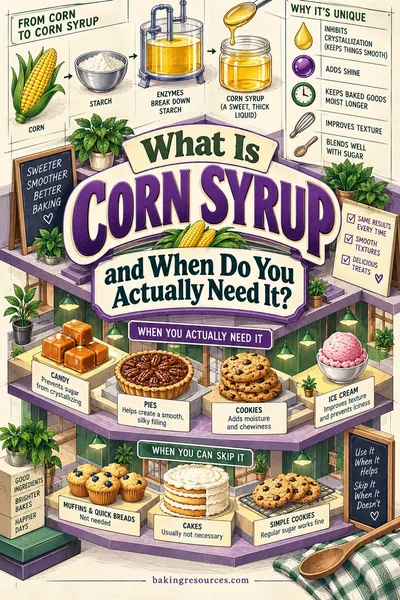 Baking guideWhat Is Corn Syrup and When Do You Actually Need It?See the chart →
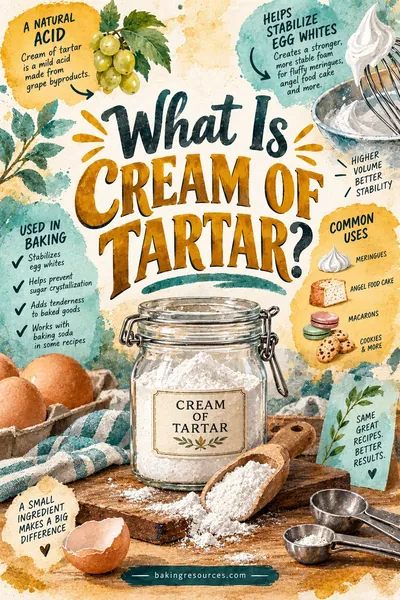 Baking guideWhat Is Cream of Tartar and What Does It Do in Baking?Read it next →
How to read a candy thermometer
- Get the tip in the syrup. The bulb or probe needs to sit in the boiling syrup, not in the foam on top. Tilt the pan a little for small batches so the syrup is deep enough.
- Keep it off the bottom. The pan bottom runs hotter than the syrup. A clip-on thermometer should hang so the tip sits about 1/2 inch above the base.
- Read at eye level. Looking down at a glass thermometer can make it read a degree or two off.
- Watch the pace. Syrup sits around 212 to 220°F for a long time while the water boils off, then climbs fast. The last 10 degrees can pass in a minute or two, so stay close.
- Pull it a degree early. The pan holds heat, so the syrup keeps climbing slightly after you take it off the burner.
Digital probe thermometers are quick and easy to read, while clip-on glass ones let you watch the climb hands-free. Either works if it is accurate, which brings us to the next step.
Calibrating with boiling water
Thermometers drift, and even a new one can be a few degrees off. Before a candy session, bring a pot of plain water to a full rolling boil and put your thermometer in it for a few minutes.
At sea level, water boils at 212°F. If your thermometer reads 210°F, it reads 2 degrees low, so add 2 to every target. If it reads 214°F, subtract 2. If you live above sea level, this test does double duty, because it also shows your local boiling point. Whatever the difference is from 212°F, adjust every number in the chart by that amount. That one test covers both your thermometer error and your altitude. The stage finder above has a box where you can type your boiling water reading, and it uses that instead of the altitude estimate.
Altitude adjustment
Water boils at a lower temperature the higher you go, about 1°F lower for every 500 feet above sea level. Since syrup reaches each stage when enough water has boiled off, every candy stage arrives at a lower temperature too, by the same amount.
So at 1,000 feet, subtract about 2°F from each target. At 5,000 feet, subtract about 10°F. That means fudge, a 235 to 237°F candy at sea level, is done at about 225 to 227°F in a mountain town around 5,000 feet. If you cook it to the sea-level number there, you will overshoot and end up with crumbly, hard fudge.
The boiling water test is the most accurate way to find your number, since weather shifts the boiling point by a degree or so from day to day. For other changes at elevation, like cutting leavening in cakes, see our high altitude baking chart.
 Baking guideHigh Altitude Baking Adjustments: The Chart by ElevationTake a look →
Worked example: caramels at 3,000 feet
Say you live at about 3,000 feet and your caramel recipe says to cook to 246°F, which is the firm ball stage.
- Estimate from altitude. 3,000 divided by 500 is 6, so subtract about 6°F. That gives 240°F.
- Check with boiling water. Your thermometer reads 205°F in boiling water today. 212 minus 205 is 7, so subtract 7 instead.
- Set your real target. 246 minus 7 is 239°F. That is the number to watch for today.
- Pull it a hair early. Take the pan off at 238 to 239°F and confirm with a quick cold water test: you want a ball that holds its shape but squishes when pressed.
The boiling water test beat the altitude estimate by a degree here, which is common. It caught both the weather and a thermometer that reads a little low.
The cold water test
Before thermometers were common, candy makers tested syrup by dropping a little into cold water. It is still a great backup, and a good way to double-check your thermometer.
- Fill a small bowl with very cold water, ice water if you can.
- Take the pan off the heat while you test so the syrup doesn't keep climbing.
- Drop about 1/2 teaspoon of syrup into the water.
- Let it sit a few seconds, then gather it with your fingers and check the shape against the chart.
- If it isn't there yet, put the pan back on the heat, cook a minute more and test again with fresh water.
Soft ball flattens in your fingers. Firm ball holds its shape but gives. Hard ball is stiff and sticky. Crack stages snap instead of forming a ball. Use a clean spoon each time.
Humidity and candy
Sugar pulls water from the air. On a humid or rainy day, candy that has reached the right temperature can still soak up moisture while it cools and sets, leaving caramels sticky, divinity runny and hard candy tacky.
The common fix is to cook 1 to 2°F higher than the recipe says on muggy days, and to store finished candy in airtight containers right away. Divinity and meringue-based candies are the most sensitive, so save them for dry days if you can. Our page on baking in humid weather covers how humidity affects sugar, dough and frosting.
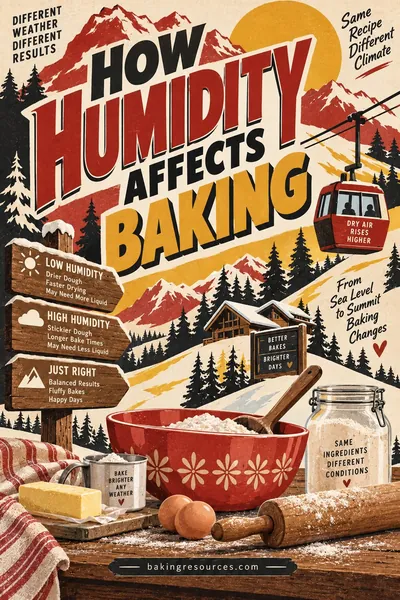 Baking guideHow Humidity Affects Baking: Flour, Dough and SugarLearn more →
Holiday candy making and safety
The holidays are the busiest candy season of the year, from fudge and peanut brittle for gift tins to divinity, caramels and toffee for Christmas trays and party spreads. A few tips keep it fun:
- Hot sugar burns badly. Syrup at hard crack is around 300°F and sticks to skin. Keep kids and pets away from the stove, use a deep heavy pot, and keep a bowl of ice water nearby for any splashes.
- Prep everything first. Butter the pan, measure the nuts and set out extract before you start. Candy won't wait while you hunt for an ingredient.
- Don't double recipes. A bigger batch cooks differently and is harder to read. Make two batches instead.
- Add chocolate after. To top toffee with chocolate, melt it gently; for a glossy snap, see how to temper chocolate.
 Baking guideHow to Temper Chocolate at Home: Snap, Shine, No BloomRead the step by step →
Short on time? Saltine toffee is one of the easiest hard-crack candies to start with. And if you are making caramel apples for a fall party, our tips on keeping caramel on apples help it stay put.
 Baking guideSaltine Toffee Without Chocolate: Ratios and TimingPick a substitute →
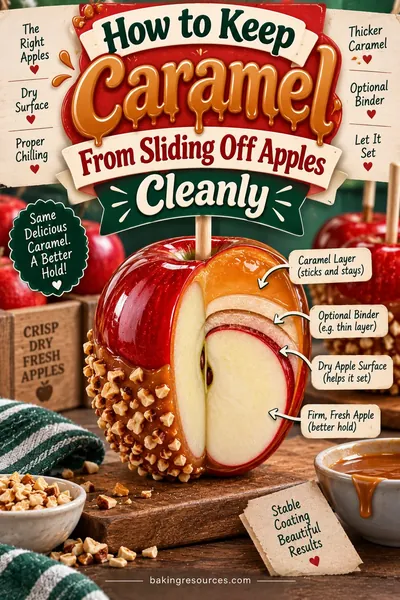 Baking guideHow to Keep Caramel From Sliding Off Apples CleanlySee how it's done →
Troubleshooting
- Grainy fudge. Sugar crystals formed. Wash down the sides of the pan with a wet pastry brush while it cooks, don't stir after it boils, and let it cool to about 110°F before beating.
- Fudge won't set. Pulled too early, or your thermometer reads high. Calibrate it and cook a degree or two hotter.
- Caramels too sticky or too hard. Each degree changes the chew. Go 2°F higher for firmer, 2°F lower for softer.
- Toffee separated into a greasy layer. Usually from heating too fast or sudden temperature changes. Use medium heat and stir steadily.
- Hard candy is sticky. It didn't reach hard crack, or it is absorbing humidity. Cook to at least 300°F and store it airtight.
- Divinity won't hold peaks. Syrup too cool or a humid day. Cook to the higher end of hard ball and make sure your whites are beaten properly; see how to whip egg whites.
 Baking guideHow to Whip Egg Whites: Soft, Firm and Stiff PeaksLearn the method →
Questions people ask
What temperature is soft ball stage?
Soft ball stage is 235 to 245°F (113 to 118°C) at sea level. A drop of syrup in cold water forms a soft ball that flattens when you lift it out. It is the stage for fudge, pralines, fondant and marshmallows. At higher elevations, subtract about 1°F for every 500 feet, or use the boiling water test to find your exact number.
What temperature is hard crack stage?
Hard crack is 300 to 310°F (149 to 154°C) at sea level. The syrup is nearly all sugar by then, so a drop in cold water turns into brittle threads that snap. It is the stage for toffee, peanut brittle, lollipops, hard candy and spun sugar. Watch closely, since the syrup starts turning to caramel only a few degrees above it.
How do I adjust candy temperatures for altitude?
Subtract about 1°F from every target for each 500 feet above sea level, so roughly 2°F per 1,000 feet. The most accurate method is to boil plain water, note what your thermometer reads, and subtract the difference from 212°F from each target. That one test also corrects for a thermometer that reads a little high or low.
Can I make candy without a thermometer?
Yes, with the cold water test. Drop about 1/2 teaspoon of hot syrup into a bowl of very cold water, gather it with your fingers and compare it to the chart: soft ball flattens, firm ball holds its shape, hard ball is stiff, and crack stages snap. Take the pan off the heat while you test so it doesn't overcook.
Why did my fudge turn out grainy?
Grainy fudge comes from sugar crystals forming too early. Stray crystals on the pan sides, stirring after the syrup boils, or beating the fudge while it is still very hot can all start a chain reaction. Brush the pan sides down with a wet pastry brush, leave the syrup alone once it boils, and let it cool to about 110°F before beating.
Does humidity really affect candy making?
Yes. Sugar pulls moisture from the air, so on humid or rainy days candy can turn sticky or fail to set even when it hit the right temperature. Many candy makers cook 1 to 2°F higher on muggy days and store finished candy airtight right away. Divinity and meringue-style candies are the most sensitive, so save those for dry days.