
Irish Soda Bread Recipe (With or Without Raisins)

This Irish soda bread recipe gives you a craggy, crunchy crust and a soft, tender middle, with no yeast, no kneading and no waiting for dough to rise. It's flour, baking soda, salt and buttermilk, with a little butter and sugar for a softer crumb. The buttermilk's tang reacts with the baking soda the second they meet, so the loaf goes straight into a 400°F oven.
From the time you grab the bowl to a warm slice is about 1 1/2 hours, including the cooling time, and only about 15 minutes of that is hands-on. It's one of the fastest homemade breads there is, which makes it perfect for a St. Patrick's Day dinner on a busy weeknight.
One batch makes a big round loaf of about 12 slices. Want two small loaves, one to keep and one to share? Pick that size in the card below and the bake time changes for you. Raisins are optional, so you can make it plain and traditional or sweet and studded with fruit.
Recipe card
Irish Soda Bread recipe
Pick your loaf and how many you need. Every amount, the bake time and your start time update for you.



What makes soda bread rise without yeast?
The baking soda does all the work. Baking soda is a base, and buttermilk is acidic. The moment they meet, they make bubbles of carbon dioxide, and those bubbles puff up the dough in the oven. No rising time needed.
That fast reaction is also why you want to move quickly. Once the buttermilk goes in, shape the loaf and get it into the hot oven within a few minutes. If the dough sits on the counter for half an hour, a lot of those bubbles escape and the bread bakes up flatter and denser.
If you've ever wondered why this recipe uses soda and not baking powder, our guide to baking soda vs baking powder explains how each one works.
 Baking guideBaking Soda vs Baking Powder: The Difference, ExplainedRead the guide →
What is traditional Irish soda bread?
Honestly, the most traditional Irish soda bread is very plain: just flour, baking soda, salt and buttermilk. That's it. In Ireland it was everyday bread, baked on the hearth in a covered pot, and it was made to go with soup, stew or a smear of butter.
The soda bread most Americans picture for St. Patrick's Day is a little richer. It often has butter, a bit of sugar, raisins and sometimes caraway seeds or an egg. In Ireland, a white soda bread with raisins is often called "spotted dog" or "railway cake," and it's more of a treat.
This recipe sits in the middle. It has a little butter and an optional spoonful of sugar for a softer, more tender crumb, but it's still clearly bread, not cake. Want it fully traditional? Leave out the butter, the sugar and the raisins. The loaf will be a bit firmer and more rustic, and it'll still be delicious.
Irish soda bread with raisins (and other easy add-ins)
Raisins are the classic add-in. Stir them into the flour and butter mixture before the buttermilk goes in, so every raisin gets coated in flour and they don't all sink to the bottom.
| Version | What to change (for one batch) | Good to know |
|---|---|---|
| Plain and traditional | Skip the butter, sugar and raisins | Firmer, more rustic crumb. Best with soup or stew. |
| With raisins | Add 3/4 cup (110 g) raisins or currants | Golden raisins look extra pretty. Soak them 10 minutes in hot water and pat dry if they're hard. |
| Raisin and caraway | Add the raisins plus 1 to 2 tsp caraway seeds | A very popular American-Irish combo with a gentle, rye-like flavor. |
| Orange and raisin | Add the raisins plus the zest of 1 orange | Bright and a little sweet. Great toasted for breakfast. |
| Brown soda bread | Swap 2 cups (250 g) of the flour for whole wheat flour, and add 2 to 3 tbsp more buttermilk | Nuttier and heartier. Whole wheat soaks up more liquid. |
| Cheddar and chive | Skip the sugar and raisins; add 1 cup grated sharp cheddar and 2 tbsp chopped chives | A savory loaf that's amazing with tomato soup. |
Can you make soda bread without buttermilk?
Yes, and it's easy. You just need something acidic so the baking soda has something to react with. Here are the swaps that work best:
- Milk and lemon juice or vinegar. Measure 1 3/4 cups of milk, stir in 1 tablespoon plus 2 teaspoons of lemon juice or white vinegar, and let it sit 5 to 10 minutes until it looks a little thick and curdled.
- Plain yogurt thinned with milk. Use about 1 cup of plain yogurt plus 3/4 cup of milk. This gives a lovely tender crumb.
- Kefir. Plain kefir works cup for cup.
Don't use plain milk on its own. Without acid, the baking soda can't fully react, and the loaf will be dense and taste a little soapy. Our buttermilk substitute guide has more options, including dairy-free ones.
 Baking guideButtermilk Substitute: 8 Easy Swaps That Work in BakingPick a substitute →
Why don't you knead soda bread?
Kneading builds gluten, the stretchy network that makes yeast bread chewy. That's great for a sandwich loaf, but soda bread wants to be tender and a little crumbly. The more you work it, the tougher it gets.
So treat this dough like biscuits or scones. Stir just until there's no dry flour, tip it out and pat it into a round with a light hand. It'll look rough and shaggy. That's exactly right, and the rough bits turn into the best crunchy edges. If you rubbed the butter in with your fingertips the same way you would for biscuits, you're on the right track.
Why do you cut a cross in Irish soda bread?
The deep cross isn't just for looks. Soda bread is a thick, dense round, and the cuts let heat reach the middle so the center bakes through before the crust gets too dark. They also let the loaf open up as it rises, instead of cracking in random places.
There's a sweet bit of folklore too. Some Irish families say the cross blesses the bread, and some say it "lets the fairies out." Either way, cut it about 1/2 inch deep, all the way to the edges, with a sharp floured knife.
How do you know when soda bread is done?
Look for these three signs:
- The crust is deep golden brown, and the inside of the cross looks dry and baked, not pale or damp.
- The bottom sounds hollow when you flip the loaf over (use an oven mitt) and tap it.
- The center reads about 195°F on an instant-read thermometer. This is the surest test, especially for a big round loaf.
If the top is browning too fast before the center is done, lay a piece of foil loosely over the loaf for the last 10 minutes. Our guide on how to tell when bread is done covers the thermometer test in more detail.
 Baking guideHow to Tell When Bread Is Done: The Temperature TestCheck if it's done →
Common Irish soda bread mistakes
- Overmixing. The number one reason soda bread turns out tough. Stir only until it comes together.
- Too much flour. Scooping straight from the bag packs in extra flour and makes a dry, crumbly loaf. Spoon it into the cup and level it, or weigh it (500 g).
- Letting the dough sit. Get it into the oven within a few minutes of adding the buttermilk.
- Lumps of baking soda. Whisk the dry ingredients really well. A missed lump leaves a bitter, yellow-ish spot in the bread.
- Patting it too flat. Keep the round about 1 1/2 inches thick. A thin, wide loaf bakes up dry.
- Slicing it hot. Give it at least 20 minutes. The inside is still finishing as it cools, and cutting too soon makes it gummy.
How to serve Irish soda bread
Soda bread is at its best the day it's baked, still a little warm. Some family-friendly ways to enjoy it:
- Thick slices with salted butter and a drizzle of honey or a spoonful of jam.
- Next to a big pot of beef or vegetable stew, potato soup or corned beef and cabbage on St. Patrick's Day.
- Toasted for breakfast the next morning with butter and orange marmalade. The raisin version is especially good this way.
- Cut into wedges for a classroom or Sunday school St. Patrick's Day snack, with little cups of butter on the side.
How long does soda bread last?
Because it has so little fat and no yeast, soda bread dries out faster than most breads. Wrap it tightly in a clean towel or plastic wrap once it's completely cool, and keep it at room temperature for up to 2 days. After the first day it's best toasted.
Don't keep it in the fridge, which makes bread go stale faster.
Can you freeze Irish soda bread?
Yes, and it freezes very well. Cool the loaf completely, then either freeze it whole or slice it first so you can grab a piece at a time. Wrap it tightly in plastic wrap, then in foil or a freezer bag. It keeps for up to 3 months.
Thaw a whole loaf on the counter, still wrapped, for a few hours, then warm it in a 350°F oven for about 10 minutes to bring back the crust. Slices can go straight into the toaster. Our guide on how to freeze bread has more tips for keeping it fresh.
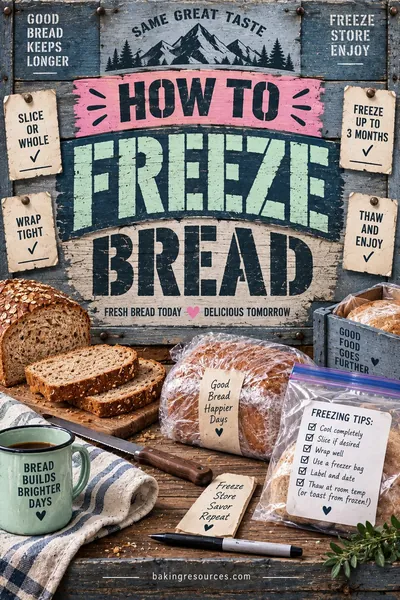 Baking guideHow to Freeze Bread and Thaw It Without Drying ItSee how long it keeps →
Can you make soda bread ahead for St. Patrick's Day?
You can mix the dry ingredients and rub in the butter up to 2 days ahead. Keep the bowl covered in the fridge, then add the buttermilk and bake when you're ready. That's the trick for having fresh, warm bread on the table with almost no work the day of.
Don't mix in the buttermilk ahead of time, though. Once it's in, the clock is ticking. If you need to feed a crowd, just make two batches, or bake two small loaves from one batch and freeze one. For more ways to scale and convert recipes, browse our free baking tools.
Questions people ask
What is traditional Irish soda bread made of?
Traditional Irish soda bread is just four ingredients: flour, baking soda, salt and buttermilk. Versions with butter, sugar, raisins or caraway seeds are richer treats, and they're the style most Americans bake for St. Patrick's Day.
Can I make Irish soda bread without buttermilk?
Yes. Stir 1 tablespoon plus 2 teaspoons of lemon juice or white vinegar into 1 3/4 cups of milk and let it sit 5 to 10 minutes. Plain yogurt thinned with milk or plain kefir also work. Plain milk on its own won't, because the baking soda needs acid to rise.
Why is my soda bread dense and heavy?
Usually it's too much flour, too much mixing, or the dough sat too long before baking. Spoon and level the flour or weigh it, stir just until combined, and get the loaf into the hot oven within a few minutes of adding the buttermilk.
Why does my soda bread taste like baking soda?
Either the baking soda wasn't whisked in evenly, or there wasn't enough acid to react with all of it. Whisk the dry ingredients well, measure the baking soda level, and use real buttermilk or a soured-milk substitute.
Can I bake Irish soda bread in a loaf pan?
Yes. Use a greased 9 x 5 inch loaf pan, score a line down the middle and bake at 400°F for about 45 to 50 minutes, until the center reads about 195°F. Tent with foil if the top browns too fast.
How long does Irish soda bread last?
About 2 days at room temperature, wrapped well. After the first day it's best toasted. For longer storage, freeze it whole or sliced for up to 3 months.